Saturday, October 27, 2018

WAKE UP CALLS


Q. My life never seems to go the way I want it to go. I move from one underpaid job to another and from one crisis to another. Six months ago I had a car accident and I was down sized from my job. Now I work for a company which may go out of business soon. My apartment was also flooded in the recent torrential rain fall. I know everyone’s dealing with the threat of terrorism but I was in crisis even before that. Why does all this disaster follow me around? 

A. Life is sending you many “wake up calls” rather than “disasters.” Wake up calls happen to all of us. Accidents, flooded apartments, job problems or changes upset us.  However, we don’t have to let these shape our lives. Someone has said, it’s not what happens to us but how we react to it that matters. Scott Peck, well known psychiatrist and author, says that life on earth is a celestial boot camp. Troubles can help us grow. 
          
In order to have the life you want you need a clear idea of what you want. You also must take risks to make this happen. Most of us avoid change. We muddle along in a job that isn’t satisfying and give little thought to where we want to go in life. It’s almost as though we’re sleep walking through life.
          
Crisis points in our life can force us out of our ruts. The Chinese character for crisis also means opportunity. When a job change is inevitable or an auto accident shakes our world we might look on these as wake up calls. Rather than seeing only the negative side to difficulties we can see them as an opportunity to grow, an opportunity to change the direction of our lives.To use problems as opportunities do the following:
          
1. Don’t get mad and don’t get even. Don’t blame others for the things that happen to you. Instead, take an honest look at yourself and the part you play in the way your life has gone. You may have come from a dysfunctional family but now you’re responsible for your life and you don’t have to let what’s happened in the past contaminate the future. Blaming others prevents us from growing. Anger, resentment and self pity keep us stuck. Get counseling if these are big issues for you.
          
2. Listen to each wake-up call “Life” sends you. Wake up calls are events that shake us up, that force us to change our lives in some way. A wake up call may even challenge our beliefs and values. When major changes are complicating or disrupting our lives we’re more open to growth because we’re forced out of our ruts. 
          
3. Take a risk as you plan your future life. Apply for jobs that pay you well. Take courses to up grade your skills. Do something new that feels risky. We may have difficulty sleeping and have physical symptoms. Change is scary. But this is how we grow. Your fear and other distressful feelings will not last. Too often we settle for a mediocre life instead of pursuing our dreams. 
                                                                                                                                               4. Discover meaning and purpose in your life.  What gives your life meaning? What is your purpose in life?  Faith in God will help you through a difficult transition and will give your life meaning.  Focusing on your purpose in life will clarify your direction and goals. 
          
5. Seek counseling when faced with a major loss that is overwhelming or when making a very difficult transition. It’s a sign of strength not weakness to acknowledge the need for help.

“Consider it all joy, when you encounter various trials, knowing that the testing of your faith produces endurance.” James 1: 2-3

Blessings, Dottie

Monday, October 15, 2018

PSYCHO INFO: MARRIAGE COUNSELING CAN BE HAZARDOUS

Q. My wife and I saw two different marriage counselors and neither one was helpful to our marriage.  One counselor wondered why my wife stayed with me since she was so unhappy. Another counselor saw us separately and told me that maybe we should separate. We don’t want to separate or divorce.  We just want to learn how to solve our marital conflicts. Marriage counseling almost tore us apart. Does marriage counseling ever help? What will help us?

A. I was a marriage counselor for over thirty years and I’ve heard many similar stories. Unfortunately not all marriage counselors are trained to help couples change the way they interact with each other. Also, not all marriage counselors view marriage as a life-long commitment which most of us make before God, family and friends.  
          
Some therapists as well as our society, think that marriage should “make us happy” not understanding that all marriages have some low points and all marriages take work. Most couples can identify some positives in their relationship and don’t want to break up their marriage. They just don’t know how to fix it. 

William J. Doherty, Ph.D. gave a presentation called “How Therapy Can Be Hazardous To Your Marital Health.” He is appalled, as I am, at what some counselors tell couples. He describes one couple who saw a therapist together. The wife was clinically depressed and medication was begun. In a later individual session with the wife the therapist told her she wouldn’t recover from her depression until she “trusted her feelings” about the marriage. Then the therapist suggested a separation. The wife protested saying she loved her husband and was committed to him. The wife was stunned and didn’t return to the counselor.

Next she talked to her priest. He urged her to wait and see whether the depression was causing the marital problems or the martial problems were causing her depression. If things improved with the medication then all was well. Then he told her if it didn’t work out he would help her get an annulment!  Again, she was stunned. 

They finally saw a competent marital therapist who helped the couple. Dr. Doherty says that this couple “survived two efforts at “therapist-induced marital suicide.” 

Other examples of things incompetent therapists may say:
  •  “Your marriage isn’t working any more.” This is like saying my car isn’t working anymore and it’s not worth repairing.
  •  “Maybe it’s time to move on.” That’s what we say about a job. 
  •  “You deserve better.” Friends, not just therapists will say this about a marriage. 
  • One therapist refers to “starter marriage.” Starter marriage? We refer to a starter home? It’s a little home you plan to leave!                     
Dr. Doherty suggests that “this kind of language represents the invasion of a consumer ethic into marriage in addition to focus on individual fulfillment and satisfaction.” He encourages couples to take marital education classes and I would agree with him. I have seen more change happening in couples marriages through marriage education than through counseling though some couples need both.  Locally, I’ve been involved with The Third Option group for married couples.  I recommend you and your wife find a Third Option group or go to Weekend to Remember. 

“Let love and faithfulness never leave you.” Proverbs 3:3

Blessings, Dottie


Monday, October 8, 2018

Two Books about Powerful Praying

I’m including two books in which the authors “hear” God speak to them. I previously reviewed Hearing God in Conversation. Then last year I read the second book which I had some questions about, but it inspired me to pray more so seemed worthwhile for others to read. I reread both of these books this year and they have sparked a deepening in my own prayer life.


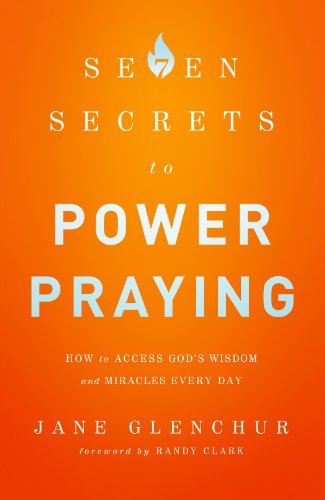
Seven Secrets to Powerful Praying: How to Access God’s Wisdom & Miracles Every Day
By Jane Glenchur
A blurb by the author on the back of the book says: “Learning to partner with God is the heart of this book. In so doing, you, too, will develop an intimate relationship with the Lord and experience miraculous answers.” Jane Glenchur writes with wit and wisdom about her practice of praying about every decision no matter how mundane. 

At the beginning of the book she runs to a store to find a good stain remover for carpet in the midst of a household emergency. She kneels to see the stain removers, puts her hand on each one and prays, God, “Is this the one?” Miraculously on the fourth one she hears a voice (two women walking by) saying, “That is the best stain remover.” She bought it and it worked!
Throughout the book Glenchur spells out her prayers in virtually any and every household, family or personal situation and often “hears” God’s voice offering his wisdom. She says his “voice” is always gentle and calm. Over years of experience with this she developed a very deep and personal relationship with God and has experienced many miraculous answers.
Out of the blue one day she heard God saying “Your mother won’t die this year.” Her mother was 88 but healthy, so this puzzled her. Three months later her mother fell and broke her pelvis and her shoulder. Doctors were grim about her recovery and suggested calling a family meeting. She hung on to God’s words and said, “She’ll be OK.” And in a couple of months her mother had recovered and was able to go back to her home.
One of the seven secrets in the book is “Toss the pros and cons lists.” Instead of trying to mentally figure out the best course of action – making lists and poring over the alternatives – She now prays and waits for God’s answer. As a compulsive list maker this impressed me!
The book is divided into three parts: Part 1 Partnering with God, Part 2 Applying the Seven Secrets to Power Praying, and Part 3 Stepping Up to the Next Level
Part 3 includes excellent chapters to guide such as Unmasking Deception, Day to Day Decisions, Praying for the Impossible, Time Management and more.
Using her seven secrets will involve going all in with God, letting go of old ways and surrendering to his instructions. She gives simple steps to manage and to learn to hear God’s voice.
I have questions about some of this though it is hard to argue with her results. Also, in reading this book I was inspired and convicted about needing to spend more time with the Lord. I have been in prayer groups and conferences in which this kind of reliance on prayer lifted up God and glorified him. This is a book to be read and reread and to be put into practice.


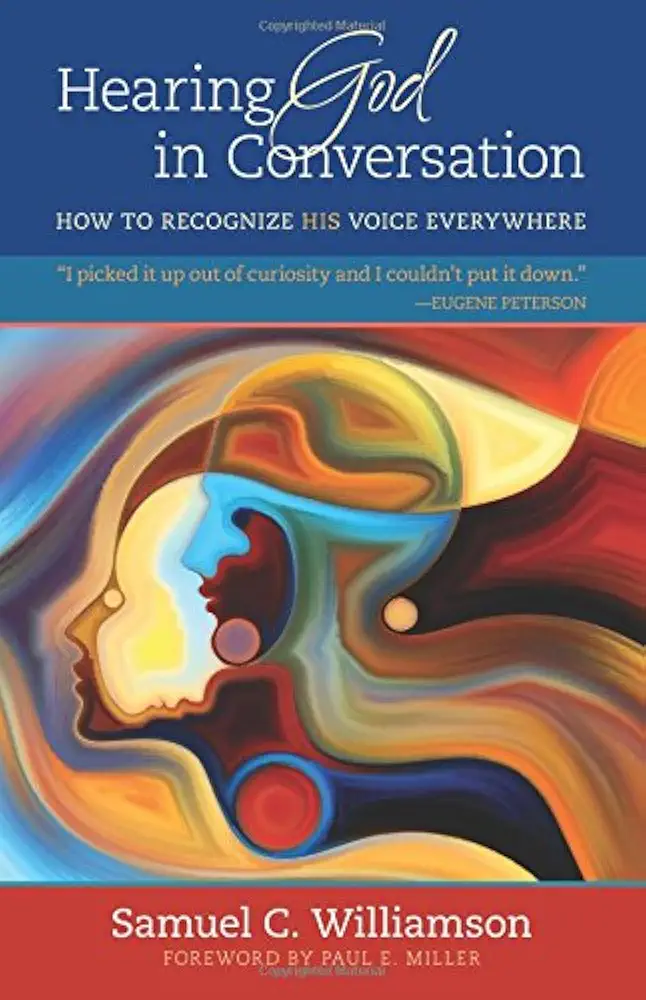
Hearing God in Conversation: How to Recognize His Voice Everywhere

By Samuel C. Williamson

Samuel Williamson in his book Hearing God in Conversation affirms the primary importance of hearing from God via Scripture but goes on to encourage believers to cultivate an ear for hearing from God and having conversations with God in a variety of ways. His parents taught him how to hear God and he assumed everyone expected to hear from God directly.

This is an excellent book, true to the Word and also citing the fact that God wants a personal relationship with us. This means we can converse with him daily; we can dialog with God, not just share our thoughts but “hear” (in our minds) from him as well. The author’s convincing unfolding of this idea is inspiring. He weaves his own life stories thorough out as well as citing many biblical examples.

Chapter titles include: The First Time I Heard God’s Voice, Conversation is the Point, How to Recognize the Voice of God, What are Scriptures for?, Brainstorming with God, God Speaks in Our Detours, Hearing God in the Ordinary, God Shouts in His Silence and The God Who Guides and more. He also includes two excellent appendixes Answers to the Arguments and Questionable and Excessive Practices.

Williamson says that sometimes God will nudge us to make a phone call, sometimes we’ll hear a verbal message and sometimes we see a picture. He tells of his grandfather in 1915 seeing red capital letters which spelled the name of a province in China. He prayed and felt called to be a missionary. He lived in that very province for two decades and planted four China inland churches. Pg 31

Williamson notes that God guides us with his voice in conversation but he also carefully orchestrates our lives. There is much good information in this book that can teach us how to hear God in conversation and recognize and better know our mighty God.

“Happy are those who find wisdom, and those who get understanding.” Proverbs 3:13 NRSV

Blessings, Dottie


Monday, October 1, 2018

Psalm 119 Meditations and Prayers Relating to the Law of God

This is the seventeenth section of Psalm 119 – the longest chapter and the longest Psalm in the Bible. There are 8 different terms referring to Scripture used through out. These are: law, testimonies, precepts, statutes, commandments, judgments, word and ordinances.  Pe                                                                                                                    
129 Your testimonies are wonderful;                                                                                   Therefore my soul observes them.

Father, Your commands are life-giving;                                                                                And so my soul lives by them.


130 The unfolding of Your words gives light;
It gives understanding to the simple.

The opening of new layers of your word gives new light;
It brings wisdom to the humble at heart.

131 I opened my mouth wide and panted,
For I longed for Your commandments.

Father, I’m eager and breathless.
Waiting for Your guidance and wisdom.

132 Turn to me and be gracious to me,
After Your manner with those who love Your name.

Look on me, shine on me and be gracious to me,
As you do with those who adore your name.

133 Establish my footsteps in Your word,
And do not let any iniquity have dominion over me.

Establish my firm and focused path in your word,
And don’t let any sin have sway over me.

134 Redeem me from the oppression of man,
That I may keep Your precepts.

Father, Save me from the coruption of our culture,
So I will follow your laws.

135 Make Your face shine upon Your servant,
And teach me Your statutes.

Show me your glorious face, Your follower and friend,
And teach me your ways.

136 My eyes shed streams of water,
Because they do not keep Your law.

Father, I cry buckets of tears
Because the wicked do not keep your law and do not know you.

Blessings, Dottie


Monday, September 24, 2018

SUFFERING TEACHES MANY LESSONS


Q. I work in a hospital and see many people suffering. I also have seen my parents and some of their friends going through pain and suffering. I’m surprised at how well some people handle tragic illness. I’ve had a pretty easy life and wonder how people manage such pain. I’m not sure I could handle it. What helps people go through suffering with grace? 

A. Life is full of suffering of varying kinds and degrees. Physical suffering is only one form of suffering. The traumas of abuse, flashbacks from war, mental anguish of any kind can be just as painful as a serious illness. The pain of loss through divorce or death also involves much emotional suffering. We all experience frustrations in our relationships, on our jobs and in circumstances almost on a daily basis. Though our daily “pains” are usually minor, the pain is very real. We all suffer.

We learn to handle suffering only as it’s forced upon us. Most of us struggle against suffering. We struggle against the reality of a serious illness and we should put up a fight. Many experience despair, fear and depression when physical illness strikes.  We are angered and even repulsed by incapacitating illness. These are normal and natural reactions. Accepting suffering and learning from suffering come only with some struggle. Some of us are defeated by suffering. Some of us grow from suffering. What is the difference? Our attitude is all important.
       
Those who grow from suffering expect some pain in life. They know life is difficult.  They don’t expect a life of comfort and security. They view life as a time of training and preparation. Our culture takes quite a different view. It leads us to expect or even demand happiness and comfort. As a result we experience much “pain” and “suffering” when the slightest disruption to our own plans occurs.
       
Those who grow from suffering count their blessings. They view their life as half full of joy - not half empty, as others look at it. They are grateful for the joys in their lives. They consider everything in their life as a gift from God - life, relationships, food, shelter, the beauty of nature. Grateful people are happy even in the midst of suffering.

Those who grow through suffering hang onto their faith in God and his plan for them in spite of hardship or pain. They use their pain as a call to prayer. They turn to God for comfort, even in the midst of despair. The Psalms help them express their anguish as well as support their faith that God is still with them. 

People who grow from suffering consider pain a gift. They learn many lessons from this gift. They learn to be dependent on God, and on family and friends. They learn we are all interdependent. They learn that things and money don’t offer security or happiness. They learn humility. They learn they aren’t the center of the universe.  They learn the difference between necessities and luxuries. They learn patience.  They learn empathy for others in need.
       
To learn more about the problem of pain, why God allows suffering and how to cope with pain read No Pain, No Gain by John R. Wimmer, The Problem of Pain by C.S. Lewis and Where Is God When It Hurts by Philip Yancy.

We rejoice in our sufferings because we know that suffering produces perseverance, perseverance character, and character hope.” Romans 5: 3-4 NKJV

Blessings, Dottie


Monday, September 17, 2018

Two Books in One - About God


IN THE LIKENESS OF GOD

By Dr. Paul Brand and Phillip Yancey

In the Likeness of God by Paul Brand and Phillip Yancey is perhaps the most remarkable book I've ever read. Actually it’s two books in one. Phillip Yancey combines two award winning books of Dr. Paul Brand - Fearfully and Wonderfully Made and In His Image. Both books describe incredible and fascinating incidents in the life of Paul Brand and both books show the reader how the human body works, and what doctors or surgeons see and experience when they operate on and care for patients.

Paul Brand, a missionary doctor who worked with people with leprosy, discovered that leprosy silences nerve cells and as a result its victims destroy themselves because they cannot feel pain. Therefore, he sees pain as a gift!

Brand and his coauthor Philip Yancey explain very intricate body processes in terms laymen can understand. The first book includes sections on the human body’s Cells, Bones, Skin and Motion. The second book presents sections on Image, Blood, Head, Spirit and Pain. In connection with each of these Brand offers gripping and heart warming stories about his experiences as a mission doctor.

On top of this Brand and Yancey expand the readers understanding of the church and Christianity by linking insights about the human body with spiritual insight into how the Church – the Body of Christ operates. The Bible refers to the Church as the Body of Christ – so the authors are on biblically solid ground here.

Enjoy this book.

“You created my inmost being; you knit me together in my mother’s womb. I praise you because I am fearfully and wonderfully made.”  Psalm 139:13-14

Blessings, Dottie


Monday, September 10, 2018

A Special Book on Marriage


Sacred Marriage

By Gary Thomas

I recently reread this is a very special book about Christian marriage published in 2000. Thomas speaks about his own marriage and offers many insights into seeking God through your marriage. He suggests marriage is a call to Holiness more than happiness.  “I have a Christian obligation to continually move toward my wife. I thought that as long as I didn’t attack my wife or say cruel things to her, I was a ‘nice’ husband, but the opposite of biblical love isn’t hate its apathy.”155 Both husband and wife must “fall forward” toward each other.

The chapters in Sacred Marriage include how marriage teaches us to love, to respect others, to persevere, to build character, to forgive, to have a servant’s heart and more. 

Chapter 11 Sexual Saints is a beautiful, thoughtful chapter about how your sexual life together can mirror your desire for God. 

Chapter 12 Sacred Presence shows us how marriage can make us more aware of God’s presence. 

Chapter 13 Sacred Mission is about how marriage can develop our spiritual calling, mission and purpose. 

Here are three of my favorite quotes from the book.

"A good marriage is not something you find, it’s something you work for." 133

"There are times I must sacrifice my ambition to succeed in God’s service so that I can be fully present and involved in the lives of my wife and children." 250

"Patience can be formed only in the crucible of frustration – making marriage, with its multitude of tasks, one of the best schools of patience there is." 252

"Give honor to marriage, and remain faiithful to one another in marriage." Hebrews 13:4 

Blessings, Dottie