Showing posts with label healing. Show all posts

Monday, March 18, 2019

FAITH HEALS


Q. I believe people of faith are healthier and live longer than those who don’t believe in God. I also think prayer heals. A few people in my church were healed when it seemed there was no hope for them. My husband says these ideas are nonsense. He said if I could prove that church attendance, prayer or faith could heal a person or make anyone live longer he would start going to church with me. Is there any scientific proof that faith heals?

A. There is scientific evidence that faith heals. Hundreds of studies have demonstrated the healing power of prayer. In a 1995 issue of The Mind/Body Medicine Newsletter a feature article cited a study by Thomas Oxman of Dartmouth Medical School, New Hampshire. He investigated the role religion plays in the health of elderly people. Oxman’s study involved 232 patients who had open heart surgery. He found that the patients who gained strength and comfort from their religious beliefs were three times more likely to survive than those who had no comfort from religious faith.
  
In addition, those who participated in social and community groups had three times the survival rate of those who didn’t take part in any organized activity. Those who had both protective factors - religious and social support - had a ten fold increase in survival.
  
The researchers don’t understand why or how religious feeling can extend life. They speculate that having faith is physiologically calming and thus prevents problems during recovery. In other words, it boosts our immune system.They also suggest that having faith gives meaning to life which is medically helpful. In contrast, the person without faith leads a more stressful life due to the lack of purpose he attributes to life. These researchers believe that the social and religious factors in heart disease survival may be as significant as well known risks such as smoking or high blood pressure.

In addition to the above study, Larry Dossey, M.D., in his book Healing Words cites impressive scientific evidence that prayer heals. He says that studies have shown that prayer positively affected high blood pressure, wounds, heart attacks, headaches and anxiety. Dossey cites a double-blind controlled study conducted by cardiologist Randolph Byrd, formerly a professor at the University of California. In this study 393 patients were assigned to two groups. 192 patients were prayed for and 201 patients were not prayed for. The results were dramatic. 

The group that was prayed for were five times less likely to require antibiotics and three times less likely to develop pulmonary edema. He says “It is simply a fact that patients sometimes improve dramatically following prayer.” 
  
A Columbia University study reported in the New York Times Magazine, December 9, 2001, had startling findings about prayer. The study found that women in a fertility clinic were almost twice as likely to get pregnant when, without their knowledge, strangers were praying for them to conceive. Women in the prayed for group had a pregnancy rate of 50 percent versus 26 percent for women in the control group. 
  
Many studies show that social ties are good for our health and isolation shortens our life. Since our social support systems often decline as we age, involvement in a church can meet the social as well as the faith needs especially of senior citizens and can help all of us live healthier, happier and longer lives.
   
Hopefully your husband will accept this evidence and give faith and church a chance. Those of us who have experienced the healing power of prayer are not surprised by these findings. We know that faith, hope and love are healing! We know that Jesus Christ is Lord of all!

“The Lord hears his people when they call to him for help. He rescues them from their troubles. Psalm 34:17 NLT

Blessings, Dottie


Wednesday, October 31, 2018

LEARNING TO RELAX

Q. I have high blood pressure and a nervous stomach. My doctor says it will help both conditions if I learn to relax. This amazes me. I thought both of these conditions were due to physical causes. How can I learn to relax when I’ve always been a tense person?

A. Our minds and bodies work together. Many physical symptoms and nervous symptoms are related to emotional stress. Someone has said, “We call it serenity when the mind is free of tension; we call it relaxation when the body is. They are really one and the same.” Relaxation is a powerful healing tool. There is research evidence that relaxation can lessen the effects of many physical symptoms as well as alleviating many psychological conditions. Persons with stress-related high blood pressure may find that regular relaxation will lower their blood pressure enough to decrease or even to eliminate the need for medication.
          
Relaxation has been shown to reduce many of our negative emotions - anger, anxiety, fear and depression. Many of these negative emotions are connected with heart disease. One study of men who took an afternoon nap showed that they had 30% to 50% less risk of heart attack. In another study individuals who were taught relaxation techniques were able to fall asleep four times faster than they were previously. Relaxation can even boost the functioning of our immune system. 
          
Relaxation will not cure everything but it is an amazingly effective way to enhance our quality of life.  Relaxation is almost discouraged by our culture. Our life styles are rushed and our schedules are crammed. Many of us don’t know how to relax. Relaxation can help all of us. Living without a daily time to relax is similar to driving your car with the brakes on all the time.  
          
When we are under stress our bodies and minds are geared for action. Our blood pressure and heart rate increases, our respiration increases, our muscles tense, the adrenaline flows. When we relax our heart rate and blood pressure decrease, our respiration decreases, our muscles relax, we feel calm.      
          
To learn how to relax your body and mind, set aside ten to twenty minutes twice a day for relaxation, meditation or prayer. Taking just these brief periods out of your busy day will improve your physical, emotional and spiritual health.
          
There are two basic steps to relaxation. 
1.  Repeat a word, prayer, or phrase.  Say this over and over.
2.  Passively ignore thoughts that come to your mind and return to repeating the word, prayer or phrase. 

Herbert Benson, M.D., who defined bodily calm as “the relaxation response” and discovered the steps which elicit it, has more recently discovered that faith is a helpful factor in learning to relax. Dr. Benson teaches his patients to pick a focus word or short phrase to say repetitively as described above. He was surprised that most of his patients chose prayer to focus their thoughts. He also found that when people chose a word or phrase that sprang from their deep beliefs and convictions they were more likely to continue the relaxation. In other words, if you use a prayer or phrase with deep meaning to you you will be more consistent in setting aside the time for doing this.
          
A faith focus also enabled Dr. Benson’s patients to elicit positive memories which aided their health.  Because of their faith they visualized wellness which facilitated their recovery. Their belief also helped them disconnect from unhealthy worries or negative thinking. Dr. Benson reluctantly began to explore the “faith factor” and he came to believe that we are biologically wired for faith. To learn more about this read Timeless Healing, The Power and Biology of Belief  by Herbert Benson, M.D.

“Come to me, all you who are weary and burdened, and I will give you rest.” Matthew 11:28

Blessings, Dottie

Monday, September 17, 2018

Two Books in One - About God


IN THE LIKENESS OF GOD

By Dr. Paul Brand and Phillip Yancey

In the Likeness of God by Paul Brand and Phillip Yancey is perhaps the most remarkable book I've ever read. Actually it’s two books in one. Phillip Yancey combines two award winning books of Dr. Paul Brand - Fearfully and Wonderfully Made and In His Image. Both books describe incredible and fascinating incidents in the life of Paul Brand and both books show the reader how the human body works, and what doctors or surgeons see and experience when they operate on and care for patients.

Paul Brand, a missionary doctor who worked with people with leprosy, discovered that leprosy silences nerve cells and as a result its victims destroy themselves because they cannot feel pain. Therefore, he sees pain as a gift!

Brand and his coauthor Philip Yancey explain very intricate body processes in terms laymen can understand. The first book includes sections on the human body’s Cells, Bones, Skin and Motion. The second book presents sections on Image, Blood, Head, Spirit and Pain. In connection with each of these Brand offers gripping and heart warming stories about his experiences as a mission doctor.

On top of this Brand and Yancey expand the readers understanding of the church and Christianity by linking insights about the human body with spiritual insight into how the Church – the Body of Christ operates. The Bible refers to the Church as the Body of Christ – so the authors are on biblically solid ground here.

Enjoy this book.

“You created my inmost being; you knit me together in my mother’s womb. I praise you because I am fearfully and wonderfully made.”  Psalm 139:13-14

Blessings, Dottie


Tuesday, August 28, 2018

The Healing Power of Exercise


Exercise has healing power. Our bodies are designed to move. The more we move the stronger we will be. Yet we spend much time sitting. We all slow down some as we age but we must keep moving.

Dr. Andrew Weil in his book Healthy Aging says “Human bodies are designed for regular physical activity. The inactivity of many people today undermines both general health and brain health and probably plays a significant role in the epidemic of depression today.”

Dr. Henry Lodge in his book, Younger Next Year says “Aging can be reversed and delayed by exercise.” This message is repeated over and over in his book.  He tells of sedentary 70 year old men who doubled their leg strength in three months. He also says that arthritis is an inflammatory disease of sedentary societies.

Both of these doctors say it’s important to vary the exercise, to do weight lifting as well as walking and that you gain more strength and benefit when you push yourself.  I’ve been a regular exerciser for decades and I added weight lifting several years ago. I can attest to the fact that this helps. My balance is better as well as my energy and strength. I won’t be younger next year but I hope to be stronger!

“I can do everything through Christ who gives me strength.” Philippians 4:13

Blessings, Dottie


Tuesday, August 14, 2018

SING FOR YOUR HEALTH


Q. I’m tired and I have little energy. My doctor can find nothing wrong with me after many tests. I’ve increased the hours I sleep at night and I exercise some but I’m still listless. I’ve been to a counselor but that didn’t help either. I have a good job, a good marriage and good kids. My doctor suggested an anti-depressant but I don’t want to take medication. What else can I do to overcome my sluggishness?

A. Try singing! New evidence suggests that singing is good for our health and boosts our energy levels. Lilias Folan, well known yoga teacher, in one of her articles some time ago told of a Benedictine monastery in France. The Benedictines are a silent order. They begin their day early each morning with chanting and prayers followed by manual labor and more chanting at intervals throughout the day and into the night. 

When there were conflicts about whether to chant in Latin or in English, a new young abbot decided to eliminate chanting. After several months of not chanting, the monks became tired and listless. Doctors were called in and various remedies were tried including giving them more sleep and changing their diet. These changes did not help; instead, the monks became even more fatigued.
          
Another doctor was called in. He found a majority of the monks “slumped in their cells like wet dish rags.”  This doctor speculated that the chanting which the monks had previously done served to recharge them. Chanting was reintroduced and the monks gradually returned to health.
          
Research shows that music can affect our health positively in many ways. Soothing sounds are credited with preventing colds, easing labor pains, lowering blood pressure, increasing endorphins (the body’s natural painkillers), calming anxiety and boosting our immune system. 
          
One study found that surgery patients exposed to soothing music had less pain and shorter recovery time than those who were not. Dr. Mitchell L. Gaynor, author of Sounds of Healing, uses harmonious sounds in helping cancer patients recover. “I’ve never found anything more powerful than sound and voice and music to begin to heal and transform every aspect of people’s lives” Gaynor says. Music makes a difference even before we’re born. The unborn child is capable of hearing for half the pregnancy and is “affected profoundly” by what he or she hears according to Gaynor.

The sounds of soothing music are low. Sounds above 90 decibels cause stress and ear damage - the opposite effect. Disharmony and noise jar our nerves and cause depressed or pessimistic thoughts or feelings. 

Researchers at the University of California, Irvine studied choir members who sang a Beethoven choral number. The researchers found that a protein used by the immune system to fight disease increased 150 percent during rehearsals and 240 percent during a performance. The boost seemed related to the singers’ happy or euphoric state of mind. The more passionate they felt while singing, the greater the increase.
          
This research suggests that we should all rush out and join a choir! We at least should find a place of worship with a great deal of uplifting singing and music. Short of that we certainly should sing in the shower, chant or sing as we meditate or pray and listen to comforting or uplifting music on a daily basis.
          
It also suggests we should avoid disharmony. Many stress producing sounds bombard our ears every day. We can’t totally avoid the shouting boss, the noise of jackhammers or the sounds of traffic. But we can mute the jarring TV commercials, choose to turn off the violent or pessimistic fare offered on TV and keep our voices pleasant at home. And we can sing!

“I will give thanks to You, O Lord, among the nations, and I will sing praises to Your name.”  2 Samuel 22:50

Blessings, Dottie


Monday, July 23, 2018

PSYCH INFO: ANOREXIA & BULIMIA


HEALTHY BEAUTY

Q. My daughter, age 17, is very preoccupied with her weight, hardly eats at all and is too thin. I tried to talk to her about this but she became offended and clammed up. I’m concerned she may have an eating disorder. What are the symptoms of these conditions? How are they treated? 

A. Many young women (and some men) in their teens and early twenties struggle with an eating disorder. They don’t realize that they have a serious problem which usually requires medical and psychiatric intervention. Anorexia is a serious, life threatening condition of deliberate starvation. A person who is anorexic has an obsession with being thin and an unrealistic standard of what constitutes thinness. Those who do not get help have a high mortality rate.   

Bulimia is characterized by recurring episodes of binge eating followed by self-induced vomiting or purging by laxatives, enemas or diuretics. Persons with bulimia have a fear of being fat and use the above methods to lose weight. Bulimics usually have less severe weight loss than anorexics. The bulimic feels shame about their problem and so is secretive about it.

The physical consequences of anorexia include: extreme weight loss, loss of menstrual periods, constipation, hair loss, dizziness, fainting, insomnia, kidney failure and severe electrolyte imbalances which can lead to heart attacks. 

The physical consequences of bulimia include menstrual irregularities, swollen glands, frequent weight fluctuations, chronic dehydration, kidney problems and cardiac arrhythmia. Bulimics also can have gum recession, breakdown of tooth enamel and esophageal damage from excessive vomiting. Some young people suffer from both anorexia and bulimia, an especially dangerous condition.

The psychological symptoms of anorexia and bulimia include feelings of inferiority, obsessional thoughts about food, fear of obesity, perfectionism and a distorted body image.

The media contributes to this extreme obsession with appearance and an unrealistic standard of what constitutes beauty. Recent research discovered that women who viewed advertisements of thin, beautiful women felt unhappy with their own appearance after only three minutes. Teens are especially influenced by these ads.

A former supermodel Carre Otis, who has been pictured on the cover of fashion magazines and was featured in the Sports Illustrated swimsuit issue some years ago has acknowledged her problem with anorexia. On ABC’s Primetime, she described going on a liquid fast for two weeks before each photo shoot.  Her doctors found she had three holes in her heart.

After heart surgery she began eating three meals a day instead of one. She told Primetime, “When I first started to eat food during the day it was the most terrifying thing for me. I would eat and then...cry for hours.” For seventeen years she starved herself all day and ate only a little dinner. 

Carre now weighs 155 pounds, 30 pounds over her ideal model weight. But she is still beautiful and modeling offers pour in. Carre Otis is a size 12. The average American woman wears a size 14.  Few women are meant to be as tiny as the women depicted in ads.  Carre also discovered her inner beauty when she went on a humanitarian trip to Nepal. “That’s when I felt like the most beautiful woman.”

You must get help for your daughter. She should have both a medical evaluation and psychotherapy. She must be monitored medically while working on the underlying psychological causes of the problem. Reassure her that the medical and counseling help will be offered to her with understanding, not blame.

A renewal of faith can also help anorexics and bulimics. Faith in God can help them give up their need to control and their need to be perfect, learning to place their life in God’s hands. 

“Heal me O Lord and I will be healed; save me and I will be saved, for you are the one I praise.” Jeremiah 17:14

Blessings, Dottie

Tuesday, May 1, 2018

Two Book Reviews on Health Remedies

If you’re uncertain about your doctor’s orders for medication, surgery or testing or if they don’t help, you may be interested in these two books. The second one will cure you by dealing with unconscious issues! The first book will teach you ways to improve your health by taking less medication, eliminating toxins and boosting the immune system through diet, exercise, probiotics and supplements.


Natural Remedies for Essential Tremor     

By Donna Gagnon

Natural Remedies for Essential Tremor by Donna Gagnon is chock full of information about remedies other than drugs and surgery that may offer symptom relief for those suffering from essential tremor. Gagnon supplies background information on Essential Tremor and on conventional drugs and surgery treatments and then covers a multitude of natural remedies that will help our health today including food choices and life style choices, eliminating toxins, nutritional supplements, alternate therapies and more. The book is well written and easy to understand plus it is documented with references. At the end of the book Gagnon puts it all together with a step by step plan for implementing lifestyle changes gradually. The information in this book will help all of us be healthier and hopefully will reduce or even eliminate tremors.


The Divided Mind: The Epidemic of Mindbody Disorders

By John Sarno

The Divided Mind by Dr. John Sarno is about the principles and practices of psychosomatic medicine written by a well known doctor who for decades specialized in helping people with back trouble using mindbody methods. Sarno is concerned that medical care in this country is in crisis. He says that over six million Americans suffering from fibromyalgia are being treated by specialists who don’t have a clue about what causes this disorder. The same is true for other disorders. He says there are hundreds of disorders that are psychosomatic. In spite of the prevalence of these disorders psychosomatic medicine is almost unknown today. Instead, doctors treat the symptoms.

Sarno writes the first four chapters in this book – about half of the book. He writes excellent chapters on the history of psychosomatic medicine, and the psychology and treatment of psychosomatic disorders. Case examples amplify his convictions about proper treatment for many people. His treatment involves teaching patients to at least keep an open mind to the fact that their problems are often due to underlying unconscious anger and the pain experienced by patients is to protect them from these feelings of rage. The patients who are open to this are often helped by realizing their unconscious issues and some accept a need for psychotherapy. Their unbearable pain goes away.

The second half of the book is written by six doctors who studied with Sarno and who use his methods. They support with their stories the need for an understanding of psychological needs and childhood or background issues. They include a doctor who specializes in hypertension, one who works in rehabilitation, a rheumatologist, an orthopedic surgeon, a doctor in sports medicine, and a family doctor. All of these doctors have similar stories of success with helping many people who were hopelessly sick prior to using this method. Chapter six by the orthopedic surgeon is terribly long and not well edited. The rest are excellent.

For those of us who recall seeing a family doctor in a leisurely setting in which time was not rushed and the doctor really knew you – I wish many of you could realize what we are missing today with managed care and doctors looking at their computers and doctors pushing medication or surgery for every ill. I know most doctors are caring but are trapped in the system. I hope some doctors will read this and open up their own practice to a kinder, more helpful way of treating illnesses. People need to exercise and eat right and quit most meds

“O Lord, my God, I cried out to you and you healed me.” Psalm 30:3

Blessings, Dottie


Tuesday, March 6, 2018

Two Books on Improving Your Health


If you’re reluctant to follow your doctor’s order for medication, surgery or testing you may be interested in these two books. You will learn ways to improve health by eliminating some medication, and eliminating toxins plus boosting the immune system through diet, exercise, probiotics and supplements.

Mind Over Meds: Know When Drugs are Necessary, When Alternatives are Better – and When to Let Your Body Heal on its Own

By Andrew Weil, MD

Mind Over Meds by Andrew Weil, MD, is an important book about the over use of medication and the importance of life style changes in order to improve health. Weil reports that “adverse drug reactions are the fourth leading cause of death in our country and rank between the fourth and the sixth more common cause of death in hospitalized patients.” He also says “antibiotics that we use to kill or inhibit the growth of disease-causing bacteria may alter liver and kidney function and interfere with digestion.”

Through chapter after chapter Weil gives examples of people who have been terribly over medicated, describes in detail the medical issues of over use and misuse and then explains the integrative approach using meds when needed, plus diet, exercise, supplements, and mind/body approaches to achieve health.

The medications he found most concerning are “over prescribed, mis-prescribed, over used and misused.” They include antibiotics, statins, GERD medications, antihistamines, sleep aids, steroids, anti-inflammatory drugs (aspirin and ibuprofen) and more. Even over the counter medications can have many side effects that cause more harm than help.

There is a wealth of information in this book. Most of us need to at least reduce the number of medications we take and learn from this book how to be healthier without them.

The End of Alzheimer’s: The First Program to Prevent and Reverse Cognitive Decline

By Dale E. Bredesen, MD

This is an exciting and amazing book that describes Dr. Bredesen’s careful scientific research to find a way to reverse Alzheimer’s and to also prevent the disease. His cure for Alzheimer’s is not a simple fix and many doctors will not admit cure is possible. (Your doctor may pooh, pooh it.) After studying brain abnormalities over some decades the author found that Alzheimer’s is not one disease but several. He discovered that thirty-six metabolic factors impact the brain. The way to reverse these changes requires a complex array of tests to rid the body of toxins and changes in life style. Some of the changes in my layman’s terms include eating organic food, taking vitamins and supplements, exercising daily, fasting 12-14 hours to give the digestion a rest and ridding the body of all toxins.

I learned about Dr. Bredesen’s protocol from a former neighbor whose wife in her fifties developed Alzheimer’s. To gain more understanding of this you can read my former neighbor’s blog. He writes beautifully and details his wife’s improvements since they went on the protocol in September 2017. She has improved already! See Matthew’s blog at www.savingjacquelynn.com. The book also describes this in detail and with case examples of cures.

“O Lord, my God, I cried out to you and you healed me.” Psalm 30:3

Blessings, Dottie


Thursday, October 19, 2017

LIVING WITH PAIN

 Q.  I’ve been suffering with chronic pain for six months. Medication relieves the pain some but the side effects of the medication stop me from using very much of it. My doctors have told me to remain as active as I can and “live with the pain.” Can you suggest anything that would help me do this?

A. There are a number of things you can do that will help you learn to live with the pain or better yet lessen or end the pain. The most important one is to develop a positive attitude. Our thoughts have a profound effect on our moods and on our pain.

Herbert Benson, M.D. in his book Timeless Healing cites the placebo effect as evidence of the power of our thoughts. Patients believe sugar pills will alleviate their pain and their belief makes this happen. A research study showed that patients with chronic pain were more likely to be handicapped, no matter the severity of their pain, if they believed pain indicated impairment. In other words, those who believed pain and disability were always linked became more crippled. When patients focused their minds on thoughts of being active and well, even though in pain, their health improved. 

Andrew Weil in his book Spontaneous Healing says the psychic aspect of pain can be modified by hypnotherapy, guided imagery, meditation and acupuncture. He also suggests that deep breathing exercises can help. Similarly, the book Nutritional Healing, a huge reference book, lists many of the same procedures and includes also biofeedback, chiropractic and more. It suggests that the physical and psychological can be intertwined. So for example a physical reduction of pain may decrease anxiety and improve outlook. The mind can also be used to relax muscles and effect other physical changes that reduce pain.
         
How can you do this? Notice what you say to yourself about your pain. Thoughts such as “I can’t stand this pain” Or “I’m never going to feel any better” can cause you to tense up, causing more pain. Thoughts such as “What did I do to cause this?” or “Why is God punishing me?” are common to most of us but can lead to guilty anguish about something you didn’t cause.  Pain is not a punishment for something we’ve done.

Express your feelings - your fears, anxiety, and anger about what has happened to you.. When we express feelings we feel relief. Write about your feelings and then let it go. Distract yourself from the pain. Focus on something other than your symptoms. Focus on what you can still do, rather than on what you’re unable to do. Listen to music, watch TV, work a crossword puzzle. 

Practice relaxation exercises. Use your imagination to keep your mind off your pain and to help you relax. Visualize a peaceful scene. See yourself in this scene and use all your senses to notice specific details such as a soft breeze, a butterfly, puffy white clouds. Learning relaxation exercises reduces the tension in your body. Concentrate on deep breathing and letting go. 

Use your faith to help you.  Meditation and prayer will relax you. The Psalms can comfort you. Ask God for help, healing and peace of mind.
         
If your chronic pain has isolated you from family and friends and from activities you enjoy, make it a goal to get involved again. You may notice your pain less if you’re out doing things. 
         
Exercise as much as you can. Due to the pain, many sufferers avoid physical activity.  This leads to a loss of strength and flexibility which can lead to depression. Gentle exercise will help decrease pain and strengthen muscles giving you greater mobility and independence. 

The responses of family and friends to your chronic pain can add to your problems. If your family misunderstands your pain, they may minimize or even dismiss it. They may not believe it’s real. Their seeming lack of support may lead to hurt or angry feelings and to depression. 

The opposite response - overprotection, also has its problems. When family and friends coddle and baby someone with chronic pain, the sufferer may become more dependent and more disabled. Talk with family and friends and tell them specifically what kind of support you need.

If you need help putting these ideas into practice, consider joining a group for people with chronic pain.

Focusing on positive thoughts in the midst of pain is not easy. The key is to monitor your thoughts and don’t dwell on how bad you feel.  Acknowledge your illness or pain but think about other things most of the time. We can’t control what happens to us but we can learn to control our thoughts.

“Pleasant words are a honeycomb, sweet to the soul and healing to the bones.” Proverbs 16:24 NASB

Blessings, Dottie


Wednesday, February 22, 2017

THREE BOOKS ON HEALTH

Here are three book reviews I wrote on books about health issues. The first book will tell you how to get younger by exercising and it may even motivate you to do so! The second book will help you learn to overcome depression, even bipolar – written by a man who was diagnosed with this. The third book will inform you about life threatening medical issues and gives valuable information

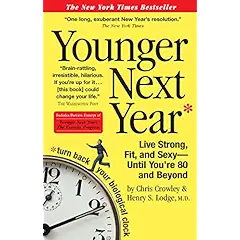
Younger Next Year: Live Strong, Fit, and Sexy – Until You’re 80 and Beyond
 by Chris Crowley & Henry S. Lodge

This book is written by a doctor and one of his patients. They alternate chapters in describing what they have learned/believe about being as healthy as possible. The main message of this book is important- aging can be reversed and delayed by exercise. This message is repeated over and over and many great ideas are presented as to how to do this, how to work exercise into your life and how to make it a habit. I learned it is important to vary the exercise, to do weight lifting as well as walking or running and that you gain more strength and benefit when you push yourself beyond your limits.

The book is very repetitive and there are many slap stick comments and ski trip stories from Crowley that may appeal to some guys but not to many women or non skiers. I also thought the mention of evolution in many of the scientific descriptions is irrelevant.

The research evidence from Lodge gave convincing proof that exercise is key to good health. For example, he tells of sedentary 70 year old men who doubled their leg strength in three months. He also says that arthritis is an inflammatory disease of sedentary societies.

Younger Next Year also includes chapters on nutrition, emotions and connecting with others. Each of these topics greatly impacts our health especially as we age. A final chapter on sex reassures readers that this can continue into old age. The book hints at the importance of “spirituality” but says it’s not within the scope of the book. Yet they use Alcoholics Anonymous as an example of the benefits of connecting. The reason AA works is the “spiritual” path the 12 Steps require. 

I’ve been a regular exerciser for decades and I am a senior citizen. I added weight lifting four years ago. I can attest to the fact that this helps. My balance is better as well as my energy and strength. As a result of reading the book I’m jacking up my workouts so I’ll be even younger next year!

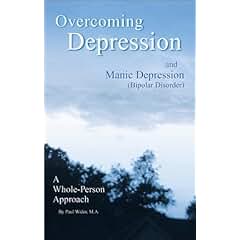
Overcoming Depression
And Manic Depression: A Whole Person Approach

By Paul Wider

Message from the author: “My heart goes out deeply to those who suffer from depression and bipolar. There is hope. It is possible to regain control of your life. I invite you to learn to master your moods using the multifaceted approach contained in this book. I wish you peace and wellness.”

Overcoming Depression is an unusual book chock full of information in a easy to read style with illustrations and steps to take for anyone who is depressed from one who has been through it. Wider was diagnosed with bipolar but refused to accept the diagnosis. He went on a quest to learn to manage his moods. The book has chapters on symptoms, causes, tools, needs, diet, faith and more. The author has used many avenues to help himself and after trial and error has many good answers.

As a retired clinical social worker and advocate for healthy life styles I’m pleased to know depression and bipolar can be successfully approached in holistic ways in cooperation with medical doctors. Mr. Wider’s book is a Godsend for those who read it and decide to try the various approaches to master their moods.

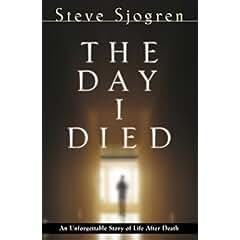
The Day I Died by Steve Sjogren

I reread The Day I Died after telling a friend about this book. She asked me if we had a Living Will and specifically wondered about water being withheld – an item on the usual Living Will. In the book Sjogren says that Terry Schiavo “died a slow and painful death due to dehydration.” He also tells of his own medical trials and says “of all the pain I experienced in life nothing comes close to the pain of being dry in the mouth for 7 to 10 days.” Sjogren describes his near death experiences of God’s reassurance and offers valuable thoughts about medical care and especially end of life care – and much more.

Steve Sjogren, former pastor of the Vineyard Community Church in Cincinnati tells a gripping true story of a simple surgery gone awry. He “died” twice during this and lives today because his wife didn’t listen to the claims that he had lost brain capacity while in a coma. She refused to pull the plug. His church and thousands of people across the country prayed for him and the prayers plus a new doctor and hospital pulled him back from the brink of death.

Much of the book describes the lessons Sjogren learned as a result of having to slow down. These are valuable lessons for all of us. His positive suggestions for what to say when visiting a dying friend are valuable. His life long daily practice of journaling and setting goals fascinated me also. This is an intriguing and valuable book.

Blessings, Dottie

“Praise the Lord, O my soul, and forget not all his benefits – who forgives all your sins and heals all your diseases.” Psalm 103:2-3


Thursday, July 7, 2016

SCARS

While walking on the treadmill one day I thought about SCARS. Everyone has scars. Some are physical scars inflicted by a surgeon or by a conflict or accidentally. I have scars on my abdomen – one small one looks like an appendectomy scar. I received it when my younger sister and I, as toddlers, fought over a pair of scissors. I have another large scar running from my belly button downward about four inches. It’s a Caesarean scar from my daughter’s birth. The emergency operation saved her life and blessed us with a beautiful baby girl. My younger sister has a big scar the shape of an iron on her right leg. She sat playing near the ironing board while our older sister ironed. The iron fell and boy that must have hurt. Her scar is visible and affected her view of her appearance growing up.

Jesus had scars also – in his hands, his feet and his side.

These are all physical scars. These scars serve as reminders of injury. They no longer cause us physical pain. Scars show the amazing power of our body to heal. My thoughts about scars were prompted by the Deacon in charge of Senior lunch. He talked about how amazing the body is – healing a cut in just a few days. And he said we don’t see the holes in our streets magically fill up like this. Yet the human body often quickly repairs damage done to it.

We all have scars but many of them are inside, unseen, hidden. We’ve all been hurt. No one goes through life unscathed. Some of us are hurt more deeply than others. Some have lost a mother or father when they were a young child. Some have been abused, abandoned, or misunderstood as children. Some were scarred by parents divorcing - it hurt so much. Conflicts in families abound – between spouses, with parents, with children. Some of us experience major life-threatening illness. We weep over these kinds of hurts. We also weep over words people say to us that criticize or hurt us. And we inflict others with unkind words. We live in a world of hurt. Hurt people, hurt people.

Jesus had inner scars also. He wept over Lazarus death. He wept over Jerusalem.
Though he reached some people with his message of love and grace – others mocked and killed him. He went through much suffering, rejection and even death for us. And he rose again. Scripture says: “He was pierced for our transgressions, he was crushed for our iniquities, the punishment that brought us peace was upon him, and by his wounds we are healed.” Isaiah 53:5

By his wounds we are healed! He covered our sin, hurt, injury and scars with his own wounds of love and grace. He died to save us.

Why does God allow such pain and brokenness in our lives? Paul suggests our brokenness perfects us. Paul writes: In order to keep me from becoming conceited, I was given a thorn in my flesh, a messenger of Satan, to torment me. Three times I pleaded with the Lord to take it away from me. But he said to me, “My grace is sufficient for you, for my power is made perfect in weakness.” Therefore I will boast all the more gladly about my weaknesses, so that Christ’s power may rest on me. That is why, for Christ’s sake, I delight in weaknesses, in insults, in hardships, in persecutions, in difficulties. For when I am weak, then I am strong. 2 Corinthians 12:7-10

God’s power is made perfect in our weakness! How can this be? Our scars and hurts and hardships humble us, break our self-will, tear up the smooth façade of our settled lives – then our weakness allows his power to shine in us.

In time, Christ heals us of our sinful, difficult, painful or traumatic experiences. Then in our weakness He empowers us to minister to others with similar trials. Our scars and disappointments and trials result in helping others and bring glory to God.

This is hard to believe while we are in the midst of a trial. Healing takes time. In the meanwhile we must cling to Jesus. We must trust him and cherish our difficulties/scars. Are you clinging to Jesus? Have you thanked Him for your scars?

“He heals the brokenhearted and binds up their wounds.” Psalm 147:3

Blessings, Dottie Parish


Friday, February 19, 2016

Three Books on Healing

The Heart Speaks: A Cardiologist Reveals the Secret Language of Healing

By Dr. Mimi Guarneri

The Heart Speaks is a beautiful book written by a cardiologist who has a warm heart. Dr. Mimi weaves her life experiences and stories about her patients throughout the book including the childhood tragedy of losing her mother to a heart attack. Her medical school training required her to suppress all her emotions. She learned to do this and for years operated on heart patients but didn’t really know them. She says in the introduction:

“No one spoke of the other layers of the heart that didn’t appear in a stress test or electrocardiogram: the mental heart affected by hostility, stress and depression, the emotional heart that could be crushed by loss, the intelligent heart that has a nervous system of its own and communicates with the brain and other parts of the body. No one lectured about the spiritual heart that yearns for a higher purpose, the universal heart that communicates with others, or the original heart that beats in the unborn fetus before the brain is formed.”

Dr. Mimi learned to listen to her patients in order to discover the correct diagnosis, finding this often more accurate than tests or her medical training. As a result the most puzzling or difficult patients responded and were helped by her.

She offers research to support her use of an integrative approach to her patients. She develops an individual treatment plan for each patient including for example, acupuncture, yoga, good nutrition, and prayer.

My review doesn’t do justice to this marvelous book. This book will be helpful to patients, doctors, nurses and the entire medical community. This approach has and will open and heal many hearts. Perhaps it will even help transform the health care system.

Dr. Lani’s No-Nonsense Bone Health Guide: The Truth about Density Testing, Osteoporosis Drugs and Building Bone Quality at Any Age

By Dr. Lani Simpson

Dr. Lani’s No-Nonsense Bone Health Guide is an outstanding book on the health of our bones and on understanding and treating osteoporosis. Dr. Lani is a chiropractor who has been trained to read dexa-scans and understand these tests. She works closely with a medical doctor. Her research and experience with patients is detailed in the book and is thorough and convincing. She experienced bone loss herself and tells her own story. Dr. Lani says that many of the medications given to promote bone growth actually cause harm. (I have had difficulty with these same medications so was glad for the validation of this.) She also says that often dexa-scans are not accurate and she gives information about how to assure you receive valid tests.

I was most surprised by Dr. Lani’s connecting the health of the digestive system of the patient and the health of the bones. When the digestion is off the body does not absorb the needed nutrients especially calcium and magnesium. (I’ve had digestive problems and never connected this with bone loss.) Instead of giving separate medications or treatment for the bones and the digestion she believes it’s essential to treat the body as a whole and understand what will help it heal. She offers a realistic plan for eating right, taking some supplements and exercising to correct the digestive issues and build stronger bones or at least stop the bone loss from progressing. This is a great reference book with much information here including pictures and diagrams. I highly recommend this book.

Spontaneous Healing: How To Discover and Enhance Your Body’s Natural Ability to Maintain and Heal itself

By Andrew Weil, M.D.

Spontaneous Healing is a fascinating and enlightening book. A friend, who had leukemia at 17 and is a healthy 50 year old now, raved about this book so I bought it. It's in paper back and probably in most libraries as it was published in 1995.

The thesis of the book is that the medical profession only concerns itself with disease. Medical schools teach nothing about prevention or about the ability of the body to heal itself. Dr. Weil, a Harvard Medical School graduate, is not against medical care but tells many ways we can encourage our body’s immune systems to help us heal. He gives many examples of “spontaneous healing.” A chapter near the end of the book titled Cancer as a Special Case gives detailed information about approaches to this disease.

Dr. Weil notes the pessimistic stance of many doctors who predict the worst - which can affect the mind and body of the patient negatively. The book offers many patient case examples of healing through natural means and many of his patients say their illness is a gift which helped them change their unhealthy or dysfunctional life styles. They learned to accept what happened in life. I highly recommend this book. 

These three books have informed my thinking about how to beat disease and I have used much of the information given to boost my immune system and stay healthy.

“Praise the Lord, O my soul, and forget not all his benefits – who forgives all your sins and heals all your diseases.” Psalm 103:2-3

Blessings, Dottie


Wednesday, January 16, 2013

Over Reactions in Marriage – Part 2


Q. Recently my husband really let me down. We had made plans to do something on a certain date. He forgot all about it and made plans to do something else. He was very busy at the time and hadn't written down the date. I know he doesn't pay attention to details like I do. The problem is I over react to this sort of thing. I take it very personally.  First I was absolutely furious. Then I got really pitiful and felt totally unloved and unlovable. I cried buckets and it was days before I recovered. Why do I over react to this sort of thing and how can I learn not to?
           
A. Many of us over react but we’re not usually aware of it or honest about it as you are. It’s important to pay attention to over reactions as they may signal that something else is going on other than the present day issue. The current experience touches pain deep inside us. We feel like a hurt, needy child. 
           
Over Reactions are Normal in Children
Babies and young children feel things intensely and have little control over their emotions. When frustrated they’re consumed with anger. When hurt, they cry intensely. As we get older we become more civilized and learn to delay or moderate our feelings. We learn to remain in touch with our feelings without being overwhelmed by them.

A child who experiences a trauma such as abuse, neglect or abandonment, will often learn to disassociate his feelings in order to not to be overwhelmed and to survive. He learns not to feel. However, the feelings are locked up inside. Even without a major trauma, we may have had experiences which were too overwhelming to deal with as children. We carry these feelings and issues with us into our adult life.
           
Conquering Over Reactions
Though we may not remember the "trauma" itself, something in our present circumstance triggers long buried emotions. To overcome this, notice the times when you do over react. Write down what happened and how you reacted. After you have several examples of over reacting, figure out what these examples have in common. The scene in each example may be similar and may be reminiscent of how you felt as a child. Write about these childhood scenes. How does your present life compare? Realize you are no longer as vulnerable as you were back then.
           
Learn to love the hurt and needy child inside you. Remind yourself that the needy child is irrational and emotional for some very good reasons. Tell her God loves her and will take care of her. Tell her you also love her and will take care of her. Read John Bradshaw's books Healing the Shame That Binds You or Homecoming for additional ideas on healing the inner child.
           
Counseling can also help you work through deep inner hurts. 
See Over Reactions in Marriage - Part 1.

“You will know the truth and the truth will set you free. “ John 8:32 NLT

Blessings, Dottie