Showing posts with label best books. Show all posts

Monday, October 8, 2018

Two Books about Powerful Praying

I’m including two books in which the authors “hear” God speak to them. I previously reviewed Hearing God in Conversation. Then last year I read the second book which I had some questions about, but it inspired me to pray more so seemed worthwhile for others to read. I reread both of these books this year and they have sparked a deepening in my own prayer life.


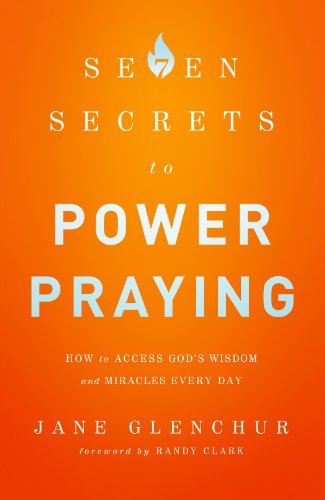
Seven Secrets to Powerful Praying: How to Access God’s Wisdom & Miracles Every Day
By Jane Glenchur
A blurb by the author on the back of the book says: “Learning to partner with God is the heart of this book. In so doing, you, too, will develop an intimate relationship with the Lord and experience miraculous answers.” Jane Glenchur writes with wit and wisdom about her practice of praying about every decision no matter how mundane. 

At the beginning of the book she runs to a store to find a good stain remover for carpet in the midst of a household emergency. She kneels to see the stain removers, puts her hand on each one and prays, God, “Is this the one?” Miraculously on the fourth one she hears a voice (two women walking by) saying, “That is the best stain remover.” She bought it and it worked!
Throughout the book Glenchur spells out her prayers in virtually any and every household, family or personal situation and often “hears” God’s voice offering his wisdom. She says his “voice” is always gentle and calm. Over years of experience with this she developed a very deep and personal relationship with God and has experienced many miraculous answers.
Out of the blue one day she heard God saying “Your mother won’t die this year.” Her mother was 88 but healthy, so this puzzled her. Three months later her mother fell and broke her pelvis and her shoulder. Doctors were grim about her recovery and suggested calling a family meeting. She hung on to God’s words and said, “She’ll be OK.” And in a couple of months her mother had recovered and was able to go back to her home.
One of the seven secrets in the book is “Toss the pros and cons lists.” Instead of trying to mentally figure out the best course of action – making lists and poring over the alternatives – She now prays and waits for God’s answer. As a compulsive list maker this impressed me!
The book is divided into three parts: Part 1 Partnering with God, Part 2 Applying the Seven Secrets to Power Praying, and Part 3 Stepping Up to the Next Level
Part 3 includes excellent chapters to guide such as Unmasking Deception, Day to Day Decisions, Praying for the Impossible, Time Management and more.
Using her seven secrets will involve going all in with God, letting go of old ways and surrendering to his instructions. She gives simple steps to manage and to learn to hear God’s voice.
I have questions about some of this though it is hard to argue with her results. Also, in reading this book I was inspired and convicted about needing to spend more time with the Lord. I have been in prayer groups and conferences in which this kind of reliance on prayer lifted up God and glorified him. This is a book to be read and reread and to be put into practice.


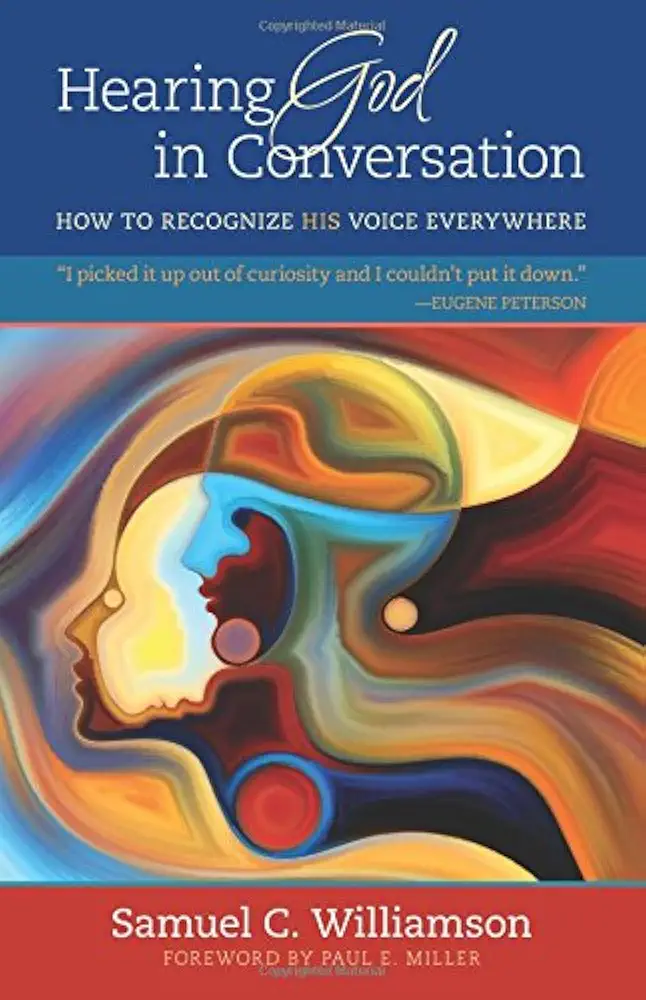
Hearing God in Conversation: How to Recognize His Voice Everywhere

By Samuel C. Williamson

Samuel Williamson in his book Hearing God in Conversation affirms the primary importance of hearing from God via Scripture but goes on to encourage believers to cultivate an ear for hearing from God and having conversations with God in a variety of ways. His parents taught him how to hear God and he assumed everyone expected to hear from God directly.

This is an excellent book, true to the Word and also citing the fact that God wants a personal relationship with us. This means we can converse with him daily; we can dialog with God, not just share our thoughts but “hear” (in our minds) from him as well. The author’s convincing unfolding of this idea is inspiring. He weaves his own life stories thorough out as well as citing many biblical examples.

Chapter titles include: The First Time I Heard God’s Voice, Conversation is the Point, How to Recognize the Voice of God, What are Scriptures for?, Brainstorming with God, God Speaks in Our Detours, Hearing God in the Ordinary, God Shouts in His Silence and The God Who Guides and more. He also includes two excellent appendixes Answers to the Arguments and Questionable and Excessive Practices.

Williamson says that sometimes God will nudge us to make a phone call, sometimes we’ll hear a verbal message and sometimes we see a picture. He tells of his grandfather in 1915 seeing red capital letters which spelled the name of a province in China. He prayed and felt called to be a missionary. He lived in that very province for two decades and planted four China inland churches. Pg 31

Williamson notes that God guides us with his voice in conversation but he also carefully orchestrates our lives. There is much good information in this book that can teach us how to hear God in conversation and recognize and better know our mighty God.

“Happy are those who find wisdom, and those who get understanding.” Proverbs 3:13 NRSV

Blessings, Dottie


Tuesday, December 27, 2016

Best Books Read in 2016

In 2016 I read a total of fifty-three books. Forty were new to me and thirteen were books I reread. I’ve selected the best of the books I first read in 2016:
1. A novel about the plight of Christians in China.
2. A biography about a doctor’s help to poverty stricken people in Haiti.
3. A book by a black woman about the negative effects of government help to the poor. 
4. A book on hearing God speak to us.

Each book is well written and each is packed with information and wisdom. Enjoy!

Safely Home by Randy Alcorn

Safely Home is a profound and brilliant novel about the plight of Christians in the house churches in China. The story revolves around an American executive and his Chinese college roommate – twenty years after they have graduated from Harvard. Woven throughout are delightful Chinese proverbs, intense meaningful conversations between the two roommates, the truth of the Bible, and many trials and adventures. The book gives insights into various Chinese eras and subjects including Buddhism, the Dali Lama, Mao, the Boxer rebellion, and Tiananmen Square. The corruption of people in power and the blind collusion of big business are vividly shown. Safely Home beautifully depicts the humble acceptance of suffering for Christ by the Chinese house churches. The ending gives a thrilling view of the doorway to heaven.

Mountains Beyond Mountains: The Quest of Dr. Paul Farmer, A Man Who Would Cure the World

By Tracy Kidder

This is an amazing book about an amazing man. Dr. Paul Farmer is a unique and fascinating person; he is brilliant, kind, funny and tireless in his pursuit of health care for the poor people of the world. The book gives excellent detail about Farmer’s life and work. His unusual childhood and family of origin set the stage for his adaptability to living with poverty stricken people and truly connecting with them.

Paul Farmer is a Harvard professor, infectious disease expert and an anthropologist. He lives and works in a remote town in Haiti and develops a health center there lifting the health of the region and saving many lives, though utter poverty continues. As an infectious disease specialist he and his organization, Partners in Health, create many changes worldwide in the policies for treating TB and Aids. The struggles around this are detailed.

Farmer seems to thrive in all environments and to have unlimited energy – sleeping little and working always to serve the poor. He hikes for seven hours to see two patients. If anyone questions this he says, “You’re saying that their lives matter less than some others, and the idea that some lives matter less is the root of all that’s wrong with the world.” Pg 294

Mountains Beyond Mountains takes you through Farmer’s experiences in Haiti, Peru, Cuba, and Russia. Though not a professing Christian he lives out a life of service given with love and respect. He has been called a saint and I would say he is close to this yet more fun than you would expect a saint to be! This book will change your views and may unsettle you.


Uncle Sam’s Plantation:
How Big Government Enslaves America’s Poor and What to Do About It
By Star Parker

Uncle Sam’s Plantation is a very important and comprehensive book about the negative effects government help has on the poor. Star Parker gives historical background on Roosevelt’s New Deal, President Johnson’s War on Poverty and about current government programs. She offers facts and figures that clearly show government programs do not help. In fact, they are keeping the poor from freedom and personal responsibility and wasting tax dollars.

Parker writes “In multiple studies for the Heritage Foundation, means-tested welfare spending in America exceeds $400 billion annually. That’s a whopping 14 percent of the federal budget. That’s more than a billion tax dollars per day being spent on various poverty programs yet…the data shows that less than twenty cents of each dollar actually gets into the hands of the people society is trying to help. Eighty percent is bureaucracy.” Pg 5

The author, Star Parker, has been there herself. She tells of her rebellious youth in which she stole, did drugs, had random sex, four abortions and didn’t care about life. She lived on welfare and knew how to work the system. Parker turned her life around and is now helping others do this. She is a champion for changing the system.

Toward the end of the book she writes about protecting freedom. Regarding education she says: “Our country needs to be free but not value-free. I don’t want to force my views on my neighbor. What I do want, and what is essential for the future of our country, is the freedom for my neighbor and me to choose where to send our children to school, and for our children to learn there is such a thing as right and wrong.” Pg. 233 This book shows us how to restore freedom with responsibility to our way of life.

Hearing God in Conversation: How to Recognize His Voice Everywhere

By Samuel C. Williamson

Samuel Williamson in his book Hearing God in Conversation affirms the primary importance of hearing from God via Scripture but goes on to encourage believers to cultivate an ear for hearing from God and having conversations with God in a variety of ways. His parents taught him how to hear God and he assumed everyone expected to hear from God directly.

This is an excellent book, true to the Word and also citing the fact that God wants a personal relationship with us. This means we can converse with him daily; we can dialog with God, not just share our thoughts but “hear” (in our minds) from him as well. The author’s convincing unfolding of this idea is inspiring. He weaves his own life stories thorough out as well as citing many biblical examples.

Chapter titles include: The First Time I Heard God’s Voice, Conversation is the Point, How to Recognize the Voice of God, What are Scriptures for?, Brainstorming with God, God Speaks in Our Detours, Hearing God in the Ordinary, God Shouts in His Silence and The God Who Guides and more. He also includes two excellent appendixes Answers to the Arguments and Questionable and Excessive Practices.

Williamson says that sometimes God will nudge us to make a phone call, sometimes we’ll hear a verbal message and sometimes we see a picture. He tells of his grandfather in 1915 seeing red capital letters which spelled the name of a province in China. He prayed and felt called to be a missionary. He lived in that very province for two decades and planted four China inland churches. Pg 31

Williamson notes that God guides us with his voice in conversation but he also carefully orchestrates our lives. There is much good information in this book that can teach us how to hear God in conversation and recognize and better know our mighty God.

“Happy are those who find wisdom, and those who get understanding.” Proverbs 3:13 NRSV

Blessings, Dottie


Friday, January 1, 2016

More Best Books Read in 2015

Last week I posted my list of the 7 best books read in 2015. Now I must add three amazing books I read in mid to late December just finishing the third one on 12-31. After Christmas I had time to read and what a joy these books are. Each of these books is as good or better than the seven I listed last week. They each informed, inspired and touched me. 

The Supremacy of Christ in a Postmodern World
John Piper and Justin Taylor, General Editors

This is an excellent book that will teach Christians how to respond reasonably to the unbelief in today’s postmodern world. Each chapter is by a well known theologian. I was familiar with all of them except Voddie Baughan, Jr. He wrote Chapter 2 Truth and the Supremacy of Christ and this chapter was particularly helpful to me – so helpful that I wrote up a summary of the chapter and shared it with my granddaughter who is a freshman in college and will be taking a philosophy class next semester. This chapter is highlighted with Colossians 1:15-21 insights. And I discovered in my own bible the section is called The Supremacy of Christ!

Here’s my summary of Chapter 2 using many of the words of the author:
The two major competing worldviews today are Christian theism and secular humanism. How do they each answer: the question of God, the question of man, the question of truth, and the question of ethics?

The question of God:
Christian theism – God is necessary, intelligent and all powerful.
Humanism – There is no supernatural being, no god.

The question of Man:
Christian – Man was made in the image of God, a special creation.
Humanism – A single-celled organism run amuck – a glorified ape who has lost most of his hair and gained two opposable thumbs, a cosmic accident with no rhyme or reason.

The question of truth:
Christian – Truth is absolute, it is true for all people in all places at all times.
Humanism – Classic Humanism rejects truth and believes nature is a closed system. There is nothing supernatural. Postmodern Humanism rejects “naturalistic materialism” in favor of philosophical pluralism and experientialism. Postmodern Humanism rejects truth in favor of experience.

The question of ethics:
Christian – Ethics, moral rights and wrongs are absolute, morality is rooted in the eternal, unchanging character of God
Humanism – Ethics are completely cultural and negotiable. There are no absolute truths.

Humanism’s Answers to Life’s Ultimate Questions:
Who Am I? Humanism says you are an accident. You are a mistake. You are a glorified ape. You are the result of random evolutionary processes.

Why Am I Here? You are here to consume and enjoy.

What is Wrong with the World? People are insufficiently educated or insufficiently governed.

How Can What is Wrong be Made Right? The solution to our woes is more education and more government. The world is far more educated than it was during World War I. Are we seeing fewer wars? No. So is the answer in more government? Man doesn’t improve by being governed. We just find more loop holes and exploit them.

Christian Answers to Life’s Ultimate Questions:
Who Am I? You can’t figure out who you are until you decide who Jesus is. Jesus is the image of the invisible God. He is the exact representation of the Father. He is God with us, God among us. He is the Almighty, “for by him all things were created.” (Col 1: 12-21) When you believe in the supremacy of God you will know who you are. You will say
“I am the crowning glory of the creation of God.”

Why Am I Here? The ultimate purpose of all things is to bring Christ glory and honor. He is to have supremacy and preeminence in your life. The reason for my existence goes far beyond consumption and enjoyment

What is Wrong with the World?  You are hostile to the One by whom and for whom you were created. All of us are. In short, sin is what’s wrong with the world. The problem is I start with myself as the measure of all things. I judge God based on how well he carries out my agenda for the world. I want a God who is omnipotent but not sovereign. If he is both, I am at his mercy.

How Can What is Wrong be Made Right?
Here’s what Colossians 1: 21-23 NLT says:
“You were his enemies, separated from him by your evil thoughts and actions, yet now he has brought you back as his friends. He has done this through his death on the cross in his own human body. As a result he has brought you into the presence of God and you are holy and blameless as you stand before him without a single fault. But you must continue to believe this truth and stand in it firmly. Don’t drift away from the assurance you received when you heard the Good News.”

What is wrong can be made right by the substitutionary, atoning death of Christ. There is no other means by which man may be justified.

Every other religion in the world says “You need to have a religious experience, and from that moment on you need to do more good things than bad and then hope for the best when you die.”

If these two worldviews – postmodern secular humanism and Christian theism are compared – with the former you are left empty and hopeless, man is worthless, and you are left to pursue your own satisfaction and never find it. But with the latter you are precious, you have purpose and you are powerless – but it’s okay because you were purchased. In the humiliation and exaltation of Jesus Christ we find a resolution to the question, “How can what is wrong be made right?” God is both just and the justifier. The spotless, sinless Lamb of God was crushed, rejected and killed to pay a debt he did not owe on behalf of sinners who could never pay him back. We possess the answer and we are possessed by the Answer. The Answer is Christ and his supremacy in truth.

Every chapter of The Supremacy of Christ in a Postmodern World is profound both in offering an understanding of our culture and in the need for Christians to communicate the supremacy of Christ in winsome ways. The role of the church in this is also addressed. At the end of the book is a conversation with the authors which is also insightful. This is a book that must be read and studied and reread. Beware though, it will transform you own thinking and understanding of Christ Jesus.

7 Women and the Secret of Their Greatness
By Eric Metaxas

The stories of seven amazing women are featured in this best selling book. Each chapter describes a woman who has changed the course of history.  These women lived difficult lives yet boldly and courageously changed the world. The women are Joan of Arc, Susanna Wesley, Hanna More, Saint Maria of Paris, Corrie ten Boom, Rosa Parks, and Mother Teresa. Hanna More played a role in the abolition of slavery in Great Britain; Saint Maria of Paris was a hero of the Greek Orthodox Church. I knew nothing about these two before reading this book. Each woman lived an amazing life of influence and integrity. The chapter on Rosa Parks gave me more appreciation of her story. The chapter on Mother Teresa inspired and challenged me. She lived a truly holy life ministering to all.  Each chapter is well researched and beautifully written with brilliant insight into these role models of greatness. I highly recommend this book.

Dreams and Visions: Is Jesus Awakening the Muslim World?
By Tom Doyle with Greg Webster

Dreams and Visions is an amazing book about the good news that Muslims are coming to Christ all across the Middle East. Jesus is appearing to Muslims in their dreams and “as always, Jesus touches people one by one.” Doyle recounts story after story of individual Muslims encountering Christ in their dreams. For example He tells of a Muslim woman surfing the internet and secretly studying the bible on line and then she has dreams of Jesus. The stories are of people he knows or who are known by his family in Egypt, Saudi Arabia, Iran, Jordan, Syria, Iraq, Israel, Gaza, the West Bank, and Afghanistan.

Doyle also describes gruesome Muslim culture of executioners calmly beheading friends, the cruel suppression of women and “honor killings” by a brother or father. In Syria he notes that the secret police are everywhere. The three branches of secret police not only watch the people at large but they also spy on each other.

Doyle explains Muslim thinking and beliefs and describes conversations that cut through their objections. Of course the Bible plays an essential role in completing a Muslim’s understanding of who Jesus is. Valuable information is included in the book such as a list of the statements about Jesus in the Koran and what’s missing in the Koran.

A chapter titled Intermission – The Great Awakening for Muslims, gives information about the process involved in Muslims coming to faith and the obstacles in their thinking. For example, “Islam teaches that Jesus was a great prophet, but that’s as far as it goes….Understanding Jesus as anything more than a prophet is a quantum leap most Muslims won’t even consider.” After reading from the Bible Muslims are more open to the possibility that Jesus is God.

Doyle says that Muslims have felt shame and dishonor since the time of Mohammad, but they don’t feel shame when Jesus appears to them. After a Jesus dream they say “I felt loved on a level like I have never experienced,” or “I have never felt such a surge of joy and peace.” New believers are on fire for spreading the good news. They risk their lives sharing Jesus, teaching others what they have learned and even leading a home church at night.

Here are two of his many stories – abbreviated:
Habib, a Muslim living in Bethlehem, hated Jews and resented the Wall. He was puzzled when an Israeli soldier named Danny treated him nicely when he traveled through the checkpoint. Then Habib was shot and his parents took him to the checkpoint. Danny secretly gave them his own ID telling them to go immediately to the hospital – saving his life. Habib was surprised that Danny risked this and he was also surprised Danny was applauded and given a medal for his sacrifice and commitment to peace. He was also surprised by the humane treatment he received in the hospital. He wondered why God saved him. While in the hospital he had visitations from Jesus. He found a Bible and read the New Testament. He is now a Christian and Danny is like a brother.

Josh Knight a missionary in Afghanistan had been jailed but released. Soon after that a strange Muslim approached him. Halik told him he knew God had sent him and Josh reluctantly agreed to go home with him. Once home he told Josh he and Jesus had been in his dreams seven nights in a row. His visit for tea with Halik and his wife and children turned into a three day event answering questions about Jesus. In time Halik and his wife accepted Christ and Josh and his wife mentored them. They are now strong believers and lead a house church.

A chapter on Muslims in America describes how to minister to and witness to Muslims. The concluding chapter, Extreme Discipleship, invites followers of Jesus to reach out in love to Muslims. If a Muslim moves in next door don’t call 911 – instead get to know you neighbors!

This is an inspiring, informative book that will touch and change believers so we will not fear Muslims but will reach out with love to them. It has changed my perspective on Muslims and enlarged my faith in our precious Lord.

Happy reading to all in 2016!

“I trust in you, O Lord, I say, ‘You are my God.’ My times are in your hands.” Psalm 31:14-15
Blessings, Dottie