Monday, March 9, 2015

STAYING MARRIED

Q.  My wife and I have been married for 30 years. We can’t resolve an issue that we’ve struggled with many times. We work it out for a while and then it pops up again. I love my wife but I’m not sure I can stay in our marriage any longer unless we resolve this. What do you suggest?  Are there good reasons to stay together?

A. There are many good reasons to stay together. All couples have some recurring difficulties at some point in their marriage. They stay together, in spite of the difficulties, for a variety of reasons. Some couples stay together because they made a commitment to each other and to God when they got married.

Some stay because it’s too hard to leave. Some stay because being married is better than being alone. Some stay but have given up on their marriage. They ignore the problems; they go their separate ways yet remain married. Some couples split and then wish they hadn’t. Their conflict blinded them to the good in their relationship. 
         
You may be interested in a book Married People - Staying Together in The Age of Divorce by Francine Klagsburn. The author studied long term marriages and came to the conclusion that there are some long-term marriages; she called “survivor marriages”, in which couples are resigned to continue to live together.  Marriages in which there is satisfaction and excitement she called "creative marriages." Most lasting marriages include some "survivor" times and some "creative" times. Even the most creative marriages will have some empty spots or lulls. Also, a seemingly empty marriage may actually be built on deep attachments.
         
A marriage of 30 years lasts, in part, because of the positives in the relationship, because of the “creative” times. Are you focusing on this one problem and forgetting many other areas or times in your marriage that have been good?  
         
Some couples split, marry someone else and find the same issue or issues coming up again in their new marriage. The conflict between you has something to do with you as well as with your wife. Leaving won’t solve it and will be more painful than staying.
         
Many couples stay because they have grown up and matured in their marriage; they have struggled and worked out differences. They love each other and are content though they know they may have new struggles in the future. 
    
In a poll done by Psychology Today magazine, a man married for twenty plus years said, “Commitment means a willingness to be unhappy for a while.”  Commitment also means we are willing to work on the relationship; we are willing to put time and effort into resolving issues, even 30 year old issues. 
         
Joseph Campbell in his book An Open Life describes marriage as an ordeal. It’s an ordeal because we must give up some of our self-centeredness; we must surrender or sacrifice our own wants. Life is simpler alone. We can do as we please without paying attention to the needs of others. In marriage we must give ourselves continually, over and over to the relationship.
         
Life is a learning process. We learn not when things are easy but when they’re difficult. When we have to struggle we grow. Perhaps God designed marriage to force us grow rather than to make us happy!  Look on the differences and difficulties in your marriage as opportunities to learn and grow.
         
The Third Option educational group or the Weekend to Remember can help you get unstuck and can help you regain a contented, growing love for each other.  I also recommend you read Love Is A Decision by Gary Smalley and Love Is A Choice by Drs. Robert Hemfelt, Frank Minirth and Paul Meier. Christian counseling can also help couples who are stuck.

“Be of one mind, full of sympathy toward each other, loving one another with tender hearts and humble minds.” 1 Peter 3:8 NLT

Blessings, Dottie


Tuesday, March 3, 2015

Book Reviews on Time, Aging, Death, Grieving & Heaven

I’ll be reviewing a series of books on time, aging, death, grieving and heaven. This is part one. There’s much to learn here.

Another Country: Navigating the Emotional Terrain of Our Elders 
by Mary Pipher, Ph.D.

Another Country is an outstanding, valuable book for anyone concerned about parents or grandparents who are aging and need help. The book is beautifully written – it’s a New York Times best seller. Pipher, a clinical psychologist, is knowledgeable about seniors and researched this subject extensively. She comments on the fact that our culture has changed dramatically – people are living longer yet our culture worships youth; families live at great distances from each other leaving grandparents isolated and alone.

Pipher offers many vignettes of adult children and their aging parents. Some of these stories demonstrate the helpfulness of a counselor in thinking through tough family decisions and in solving contentious family relationships.

Pipher invites us to overcome our aversion to thinking and talking about death and helps us understand elders. She says adult children live in “different time zones” from their parents and this causes difficulty understanding each other. Throughout the book she emphasizes the need for intergenerational community and offers ways to implement this. There is a wealth of information here for all generations to learn from and put to use in their relationships with each other. It is also a delightful book to read.

When Your Family’s Lost A Loved One: Finding Hope Together
By David and Nancy Guthrie

When Your Family's Lost A Loved One is a very insightful book about the difficult topic of grieving and loss. The Guthries share their experiences in losing two babies. In addition to telling their story of loss, they interview several others who have faced a difficult loss and they include information from experts. There are chapters on Her Grief, His Grief, Helping Kids Cope and ideas about handling birthdays, holidays and death days – and on remembering. This is a valuable resource for Christian families.

Beyond the Scars: Daring to Live Forward 
By F. Elaine Olsen

Beyond the Scars describes one woman’s journey of faith through the shock of a diagnosis of breast cancer, painful surgery, and difficult treatments. Olsen gives an honest, vulnerable account of her emotions and describes how she held onto her faith. She discoveed valuable faith lessons in her suffering – lessons that will help many others with any type of suffering. This beautifully written book contains forty devotional chapters with scripture, prayer and questions to ponder. Buy this for friends in similar circumstances.

“Even though I walk through the valley of the shadow of death, I will fear no evil, for you are with me; your rod and your staff they comfort me.” Psalm 23:4

Blessings, Dottie


Wednesday, February 25, 2015

Doing Hard Things & Making A Difference

This was published on my blog on April 18, 2010. Some how it was taken down so I'm adding it here in February 2015.

We’ve been talking about choosing change and doing hard things. If you want to
be inspired to change, to take risks, to help others – I have two books to recommend.

Three Cups of Tea:
One Man's Mission to Promote Peace...One School at a Time
By Greg Mortenson

This is an inspiring true story of one man’s determination to build schools in a remote and dangerous area of Pakistan. Mortenson, in the Himalaya’s mountain climbing, ran into difficulty and was rescued by the people in a remote village. He promised he would return and build them a school. And he did – plus much more.

Do Hard Things: A Teen-age Rebellion Against Low Expectations
By Alex and Brett Harris
This book was written by the Harris twins when they were 18 years old. They had already done amazing things with their life. Read and be amazed and challenged.

Is anything too hard for the Lord? Genesis 18:14

Both of these books challenge and inspire me to do God’s will even when it’s hard.

Blessings, Dottie

Tuesday, February 24, 2015

Parent Advice: The Value of Faith

Q.  My husband and I are appalled by the materialism and greed in our culture. We’ve lost close relatives recently and this has made us wonder about the purpose of life. Both of us are searching spiritually. We’re attending a church and taking our children with us. Will this help our children grow up to be less self centered and less materialistic?  Does faith affect morality?

A. You are not alone in your concerns about our culture or in your search for spiritual meaning. Research evidence shows that religious faith helps children. Stanford psychologist William Damon says children are “openly receptive to spiritual ideas” and long for a faith that will provide them with a mission in life. Children thrive with a faith which teaches concerns larger than self. Such a faith enables children to weather difficult and even traumatic life events.

Faith can help keep children and teens out of trouble.  Researchers have studied not just what causes crime but what predicts virtue.  A “spiritual sense” is one of the factors predicting moral behavior in children. The National Commission on Children agrees with these findings. They state “through participation in a religious community - in communal worship, religious education, and social action programs - children learn to assimilate the values of their faith. For many children, religion is a major force in their moral development; for some it is the chief determinant of moral behavior.”
         
Vanderbilt University criminologist Byron Johnson found that most delinquent acts were by juveniles who had little religious commitment. Church going young people were rarely delinquent. Similarly, cities with high church-going rates are usually cities with low crime rates.

How much does faith determine morality? Obviously there are many good people with no faith and many people of faith who are immoral but over all people of faith are more honest and law abiding. They also are more compassionate.

Researchers have found a clear connection between faith and generosity. A Gallup Survey showed that Americans who never attended church gave away 1.1 percent of their incomes while weekly church goers were two and a half times as generous. Twenty-four percent of the population gave 48 percent of all charitable contributions. Those who were spiritually committed also volunteered their time to help the poor, sick or elderly more often than those who declared no faith. 
         
Active involvement in your faith supports the values we all would like to see grow in our culture such as:
·      Nurture of families and family life.
·      Close relationships across generation lines; a community of people who celebrate the significant moments of life with you and miss you when you’re gone.
·      Children learning empathy, self discipline, honesty, generosity, caring for others.
·      Children and adults living the virtues of kindness, faithfulness and love.
·      A spiritual understanding that God cares for us and is with us. 
         
You’re on the right track in becoming active in a church. According to the researchers you and your family will be happier and healthier than your unchurched neighbors. More importantly, you will find peace of mind and meaning and purpose to life as you continue to seek God.

“I have come into the world as a light, so that no one who believes in me should stay in darkness.” John 12:46


Blessings, Dottie

Tuesday, February 17, 2015

Valuing Ash Wednesday

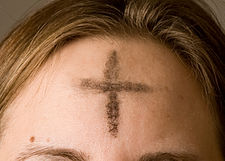
Tomorrow is Ash Wednesday, a special day celebrated in many Christian churches. Ash Wednesday is the first day of Lent, the beginning of the 40 week days before Easter. Lent is observed in many Christian churches as a period of prayer, fasting, confession, repentance, and self-denial. It echoes the 40 days in the wilderness Jesus spent fasting and overcoming temptation. It also assists Christians in focusing on Jesus resolute journey leading to his crucifixion and resurrection. We learn to identify with his unwavering obedience. We recognize the price he paid for us.

Our faith journey, described in Changing Churches, began in a United Methodist Church - a church that observes Ash Wednesday. Throughout our years there, Ash Wednesday marked the beginning of a solemn and holy time of reflection. While searching for a church in 2008 we attended an Ash Wednesday service at another Methodist Church. I noted in my journal:
           
We sang six verses of "Just as I Am" and "There is a Fountain Filled with Blood." The hymns, responsive readings, confession, and pastor's message, touched and filled us. We received ashes in the shape of the cross on our foreheads and took Communion - opening and recommitting ourselves to Him. What a sacred event!

Prayer Journaling
In 2004 the teacher of my ladies Bible class mentioned journaling Psalm 51 (about David's sin), one phrase at a time, for the forty days of Lent. This proved to be a sobering but valuable exercise. In order to build up the church, Christians must change and grow. We must face our own sin and repent. The next forty days are a good time to focus on this in prayer.

Understanding the Church Calendar
For those not in a liturgical church, Mark Galli's explanation from his book Beyond Smells and Bells, may help you appreciate the emphasis on the church calendar. He writes:
             
The church calendar aims at nothing less than to change the way we experience time and perceive reality. . . . Advent signals the new year. For the church, the annual rhythm is not winter, spring, summer and fall, but Advent, Christmas, Epiphany, Lent, Easter and Pentecost. . . . The church calendar is not about the cycle of life - school or sports or harvest time - but about the movement of history toward a glorious goal. We celebrate the past events of history not merely to remember them, but note how they infuse the present with meaning and power, and point us to our future hope.

Let this be a Holy season for all Christians to ponder and pray and deepen our faith.
Blessings, Dottie


Tuesday, February 10, 2015

DO ANY MARRIAGES LAST?

Q. My husband and me are newly weds and we’re frightened by the statistics about  marriage. Are we doomed to get divorced in five, ten or twenty years? Do any marriages last any more?

A.  The divorce statistics we read in newspapers and magazines are alarming and threatening - especially to newlyweds and young married couples. These statistics may cause couples beginning to have problems to give up, thinking divorce is inevitable anyway. They say, “Why not go ahead and get it over with?” 

Don’t let the statistics scare you. The statistics we read are presented in a negative way. They state that fifty percent of new marriages will end in divorce. Well, fifty percent will also remain married. The statistics tell us that the divorce rate is higher among teenagers, if partners come from broken homes, if either has been divorced and so forth. But these are just numbers. With even the worst statistics there are couples who defy these odds.
         
There is much the statistics reported in the media do not tell us. There are over fifty million existing marriages in the United States. The percent of all marriages ending in divorce in a specific year is less than two percent. While this is not a cause to rejoice, couples who worry about divorce need to realize that every year over 98% of married couples are staying in their marriages. Many of these couples may be having problems, may be struggling to survive in the pressures of today’s world but they are remaining together nevertheless.
         
In the media we hear so much about the infidelities and squabbles of celebrities that we forget this is not the way our society as a whole lives. The majority of married couples find satisfaction in their marriage, are committed to remain in the relationship and are faithful to each other. 
         
Here are some very positive statistics about marriage and the role it plays in our health and happiness.  A study done in California of 12,000 people showed that married people live longer than those who are single. There is also evidence that people who get divorced suffer from a higher rate of illness and death. Other research has shown that our immune systems may become disturbed after the loss of a spouse. In other words being married boosts our immune system!

I hope these statistics will give you more hope. More important than statistics is whether or not you and your husband have committed yourselves to each other before God and your family and friends; have committed in your marriage vows to love and honor each other in sickness and in health. Be determined to honor your vows and you will.
         
In addition, here are a few tips about marriage:
         
1.  Marriage will not be all that you expect it to be. It will not meet all your needs.  Learn to accept the positives that it does offer. Also build your marriage around a strong church to hold you accountable to God and your vows.
         
2.  A good marriage is hard work. We must work at it. We must learn to give and to forgive.
         
3.  Each phase of life involves some changes in each person and in the marriage relationship. Flexibility and a willingness to grow are keys to a lasting, happy marriage.

4.  Often marriages fail because the couple has not learned to use their relationship to heal their past hurts. Instead, childhood hurts are projected onto each other and a painful repetition occurs. If this happens, Christian counseling is needed and can make a difference.

I hope these ideas will help you remain committed to each other and determined to work out any problems that occur.

“Let the wise listen and add to their learning.” Proverbs 1:5

Blessings, Dottie


Tuesday, February 3, 2015

Excellent Books on Prophecy

Books on prophecy are of great interest in view of the current world situation and the many changes in the world in the last decade. Here I review three excellent books on Prophecy – or to be exact on Escatology  - the study of End Times. The Bible has much to say about this so read along in Scripture. I note the copy right date on each of these since the world is changing fast and I’m presenting them in order of date published.

Prophecy 20/20
by Dr.Chuck Missler

This book is chock full of information on many subjects. Missler ties them all together – or at least attempts to. He describes the Bible as “an integrated message system…that transcends the insights of the individual contributors.” Anyone who has read and attempted to understand the entire Bible would agree with this and with Missler’s assertion that the Bible originated outside of time since history is written in the Bible before it happens.

Another main point is the fact that even scientists today recognize that the physical universe has four dimensions – not just three. The fourth dimension is time. The scientific information interested me though some of it was difficult to comprehend.

There is much history, biblical prophecy, and description of various end time events and a great deal of very scary information about where we are now. He covers current weapons of mass destruction, biotechnology and diseases, the recurring conflict over Jerusalem, the rise of Islam, and the thrust toward one world government – and more.

The book is excellent in many respects though I have several criticisms. The chapters do not flow or tie together well. I also wish he had included an index. Finally, his ending is lame. He demonstrates throughout the book that the signs suggest we are nearing end times. In the final chapter (five pages long) he says 1. Don’t believe me, do your own research. 2. Find out in alternative media what’s going on. And the ultimate issue is the identity of Jesus Christ. I wanted more. Missler offers no thoughts about what the church must do to prepare for the end times. Copyright 2006

Implosion
By Joel Rosenberg

Implosion is a very timely book and well worth reading. It asks the question, can America recover from its economic and spiritual challenges in time? Rosenberg writes in the context of Christian prophecy and beliefs. Some of his books have been prophetic – coming out just before major events related to his topic. He has done it again with this book - dealing with the financial and moral crisis currently facing us.

Rosenberg describes the pessimists view, the optimists view and the biblical view of our current national plight. I was sobered by this part which gives many facts and figures about how deeply in debt and how deeply decadent our culture has become. He also vividly describes his biblical understanding of the Rapture.

Then Rosenberg gives a detailed, informative history about the First and Second Great Awakening. I learned that even in the 1700’s Christians were plagued with apathy! Rosenberg’s rich descriptions of Jonathan Edwards, George Whitfield and John and Charles Wesley demonstrate how their influence sparked revival. Similarly, in the chapter on the Second Great Awakening we read about Francis Asbury, Timothy Dwight and Charles Finney and their impact in igniting revival.

Rosenberg then asks the question: “Will God in his grace and mercy decide to allow the American people to experience a Third Great Awakening?” He believes our country will implode unless this happens. He challenges all Christians to get serious about their faith, offering specifics about how to pray for revival, share the Gospel with others, and disciple new believers. He says we need a national U-turn from our current path as a nation.

Rosenberg gives positive suggestions for all Christians to get serious and pray for revival in this country. This is an excellent book to guide us in what we can and must do as Christians. Only God can bring another Great Awakening. Our prayers, repentance and efforts to obey God may not be successful, but without this we will face “utter disaster.” Copyright 2012

Four Blood Moons: Something is About to Change
By John Hagee

 I was intrigued by the subject of this book after reading a number of other
books on end times prophecy and reading many of the Left Behind books. I knew little about the four blood moons. Much of the book recounts the biblical prophecy about the second coming of Jesus. Hagee lists many scriptures about watching the heavens for signs and suggests that the heavens are God’s billboard.

The last third of the book gives details about the blood moons. When the moon is in a total lunar eclipse it looks red and is thus called a blood moon. A Tetrad is four total lunar eclipses occurring consecutively and including a total solar eclipse within the series. These are rare and have occurred only three times in the last 500 years – each on dates significant in Jewish history. The book describes each of these three giving evidence of God’s protection of Israel. The fourth Tetrad and solar eclipse will happen in 2014 and 2015 each falling on a Jewish holy day. He cites reasons to suggest the time of the Rapture may be near and urges Christians to watch for the signs.  Copyright 2013

Blessed is the one who reads the words of this prophecy and blessed are those who hear it and take to heart what is written in it because the time is near. Revelation 1:3


Blessings, Dottie