Tuesday, February 24, 2015

Parent Advice: The Value of Faith

Q.  My husband and I are appalled by the materialism and greed in our culture. We’ve lost close relatives recently and this has made us wonder about the purpose of life. Both of us are searching spiritually. We’re attending a church and taking our children with us. Will this help our children grow up to be less self centered and less materialistic?  Does faith affect morality?

A. You are not alone in your concerns about our culture or in your search for spiritual meaning. Research evidence shows that religious faith helps children. Stanford psychologist William Damon says children are “openly receptive to spiritual ideas” and long for a faith that will provide them with a mission in life. Children thrive with a faith which teaches concerns larger than self. Such a faith enables children to weather difficult and even traumatic life events.

Faith can help keep children and teens out of trouble.  Researchers have studied not just what causes crime but what predicts virtue.  A “spiritual sense” is one of the factors predicting moral behavior in children. The National Commission on Children agrees with these findings. They state “through participation in a religious community - in communal worship, religious education, and social action programs - children learn to assimilate the values of their faith. For many children, religion is a major force in their moral development; for some it is the chief determinant of moral behavior.”
         
Vanderbilt University criminologist Byron Johnson found that most delinquent acts were by juveniles who had little religious commitment. Church going young people were rarely delinquent. Similarly, cities with high church-going rates are usually cities with low crime rates.

How much does faith determine morality? Obviously there are many good people with no faith and many people of faith who are immoral but over all people of faith are more honest and law abiding. They also are more compassionate.

Researchers have found a clear connection between faith and generosity. A Gallup Survey showed that Americans who never attended church gave away 1.1 percent of their incomes while weekly church goers were two and a half times as generous. Twenty-four percent of the population gave 48 percent of all charitable contributions. Those who were spiritually committed also volunteered their time to help the poor, sick or elderly more often than those who declared no faith. 
         
Active involvement in your faith supports the values we all would like to see grow in our culture such as:
·      Nurture of families and family life.
·      Close relationships across generation lines; a community of people who celebrate the significant moments of life with you and miss you when you’re gone.
·      Children learning empathy, self discipline, honesty, generosity, caring for others.
·      Children and adults living the virtues of kindness, faithfulness and love.
·      A spiritual understanding that God cares for us and is with us. 
         
You’re on the right track in becoming active in a church. According to the researchers you and your family will be happier and healthier than your unchurched neighbors. More importantly, you will find peace of mind and meaning and purpose to life as you continue to seek God.

“I have come into the world as a light, so that no one who believes in me should stay in darkness.” John 12:46


Blessings, Dottie

Tuesday, February 17, 2015

Valuing Ash Wednesday

Tomorrow is Ash Wednesday, a special day celebrated in many Christian churches. Ash Wednesday is the first day of Lent, the beginning of the 40 week days before Easter. Lent is observed in many Christian churches as a period of prayer, fasting, confession, repentance, and self-denial. It echoes the 40 days in the wilderness Jesus spent fasting and overcoming temptation. It also assists Christians in focusing on Jesus resolute journey leading to his crucifixion and resurrection. We learn to identify with his unwavering obedience. We recognize the price he paid for us.

Our faith journey, described in Changing Churches, began in a United Methodist Church - a church that observes Ash Wednesday. Throughout our years there, Ash Wednesday marked the beginning of a solemn and holy time of reflection. While searching for a church in 2008 we attended an Ash Wednesday service at another Methodist Church. I noted in my journal:
           
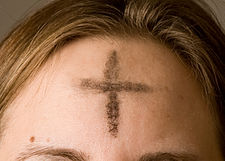
We sang six verses of "Just as I Am" and "There is a Fountain Filled with Blood." The hymns, responsive readings, confession, and pastor's message, touched and filled us. We received ashes in the shape of the cross on our foreheads and took Communion - opening and recommitting ourselves to Him. What a sacred event!

Prayer Journaling
In 2004 the teacher of my ladies Bible class mentioned journaling Psalm 51 (about David's sin), one phrase at a time, for the forty days of Lent. This proved to be a sobering but valuable exercise. In order to build up the church, Christians must change and grow. We must face our own sin and repent. The next forty days are a good time to focus on this in prayer.

Understanding the Church Calendar
For those not in a liturgical church, Mark Galli's explanation from his book Beyond Smells and Bells, may help you appreciate the emphasis on the church calendar. He writes:
             
The church calendar aims at nothing less than to change the way we experience time and perceive reality. . . . Advent signals the new year. For the church, the annual rhythm is not winter, spring, summer and fall, but Advent, Christmas, Epiphany, Lent, Easter and Pentecost. . . . The church calendar is not about the cycle of life - school or sports or harvest time - but about the movement of history toward a glorious goal. We celebrate the past events of history not merely to remember them, but note how they infuse the present with meaning and power, and point us to our future hope.

Let this be a Holy season for all Christians to ponder and pray and deepen our faith.
Blessings, Dottie


Tuesday, February 10, 2015

DO ANY MARRIAGES LAST?

Q. My husband and me are newly weds and we’re frightened by the statistics about  marriage. Are we doomed to get divorced in five, ten or twenty years? Do any marriages last any more?

A.  The divorce statistics we read in newspapers and magazines are alarming and threatening - especially to newlyweds and young married couples. These statistics may cause couples beginning to have problems to give up, thinking divorce is inevitable anyway. They say, “Why not go ahead and get it over with?” 

Don’t let the statistics scare you. The statistics we read are presented in a negative way. They state that fifty percent of new marriages will end in divorce. Well, fifty percent will also remain married. The statistics tell us that the divorce rate is higher among teenagers, if partners come from broken homes, if either has been divorced and so forth. But these are just numbers. With even the worst statistics there are couples who defy these odds.
         
There is much the statistics reported in the media do not tell us. There are over fifty million existing marriages in the United States. The percent of all marriages ending in divorce in a specific year is less than two percent. While this is not a cause to rejoice, couples who worry about divorce need to realize that every year over 98% of married couples are staying in their marriages. Many of these couples may be having problems, may be struggling to survive in the pressures of today’s world but they are remaining together nevertheless.
         
In the media we hear so much about the infidelities and squabbles of celebrities that we forget this is not the way our society as a whole lives. The majority of married couples find satisfaction in their marriage, are committed to remain in the relationship and are faithful to each other. 
         
Here are some very positive statistics about marriage and the role it plays in our health and happiness.  A study done in California of 12,000 people showed that married people live longer than those who are single. There is also evidence that people who get divorced suffer from a higher rate of illness and death. Other research has shown that our immune systems may become disturbed after the loss of a spouse. In other words being married boosts our immune system!

I hope these statistics will give you more hope. More important than statistics is whether or not you and your husband have committed yourselves to each other before God and your family and friends; have committed in your marriage vows to love and honor each other in sickness and in health. Be determined to honor your vows and you will.
         
In addition, here are a few tips about marriage:
         
1.  Marriage will not be all that you expect it to be. It will not meet all your needs.  Learn to accept the positives that it does offer. Also build your marriage around a strong church to hold you accountable to God and your vows.
         
2.  A good marriage is hard work. We must work at it. We must learn to give and to forgive.
         
3.  Each phase of life involves some changes in each person and in the marriage relationship. Flexibility and a willingness to grow are keys to a lasting, happy marriage.

4.  Often marriages fail because the couple has not learned to use their relationship to heal their past hurts. Instead, childhood hurts are projected onto each other and a painful repetition occurs. If this happens, Christian counseling is needed and can make a difference.

I hope these ideas will help you remain committed to each other and determined to work out any problems that occur.

“Let the wise listen and add to their learning.” Proverbs 1:5

Blessings, Dottie


Tuesday, February 3, 2015

Excellent Books on Prophecy

Books on prophecy are of great interest in view of the current world situation and the many changes in the world in the last decade. Here I review three excellent books on Prophecy – or to be exact on Escatology  - the study of End Times. The Bible has much to say about this so read along in Scripture. I note the copy right date on each of these since the world is changing fast and I’m presenting them in order of date published.

Prophecy 20/20
by Dr.Chuck Missler

This book is chock full of information on many subjects. Missler ties them all together – or at least attempts to. He describes the Bible as “an integrated message system…that transcends the insights of the individual contributors.” Anyone who has read and attempted to understand the entire Bible would agree with this and with Missler’s assertion that the Bible originated outside of time since history is written in the Bible before it happens.

Another main point is the fact that even scientists today recognize that the physical universe has four dimensions – not just three. The fourth dimension is time. The scientific information interested me though some of it was difficult to comprehend.

There is much history, biblical prophecy, and description of various end time events and a great deal of very scary information about where we are now. He covers current weapons of mass destruction, biotechnology and diseases, the recurring conflict over Jerusalem, the rise of Islam, and the thrust toward one world government – and more.

The book is excellent in many respects though I have several criticisms. The chapters do not flow or tie together well. I also wish he had included an index. Finally, his ending is lame. He demonstrates throughout the book that the signs suggest we are nearing end times. In the final chapter (five pages long) he says 1. Don’t believe me, do your own research. 2. Find out in alternative media what’s going on. And the ultimate issue is the identity of Jesus Christ. I wanted more. Missler offers no thoughts about what the church must do to prepare for the end times. Copyright 2006

Implosion
By Joel Rosenberg

Implosion is a very timely book and well worth reading. It asks the question, can America recover from its economic and spiritual challenges in time? Rosenberg writes in the context of Christian prophecy and beliefs. Some of his books have been prophetic – coming out just before major events related to his topic. He has done it again with this book - dealing with the financial and moral crisis currently facing us.

Rosenberg describes the pessimists view, the optimists view and the biblical view of our current national plight. I was sobered by this part which gives many facts and figures about how deeply in debt and how deeply decadent our culture has become. He also vividly describes his biblical understanding of the Rapture.

Then Rosenberg gives a detailed, informative history about the First and Second Great Awakening. I learned that even in the 1700’s Christians were plagued with apathy! Rosenberg’s rich descriptions of Jonathan Edwards, George Whitfield and John and Charles Wesley demonstrate how their influence sparked revival. Similarly, in the chapter on the Second Great Awakening we read about Francis Asbury, Timothy Dwight and Charles Finney and their impact in igniting revival.

Rosenberg then asks the question: “Will God in his grace and mercy decide to allow the American people to experience a Third Great Awakening?” He believes our country will implode unless this happens. He challenges all Christians to get serious about their faith, offering specifics about how to pray for revival, share the Gospel with others, and disciple new believers. He says we need a national U-turn from our current path as a nation.

Rosenberg gives positive suggestions for all Christians to get serious and pray for revival in this country. This is an excellent book to guide us in what we can and must do as Christians. Only God can bring another Great Awakening. Our prayers, repentance and efforts to obey God may not be successful, but without this we will face “utter disaster.” Copyright 2012

Four Blood Moons: Something is About to Change
By John Hagee

 I was intrigued by the subject of this book after reading a number of other
books on end times prophecy and reading many of the Left Behind books. I knew little about the four blood moons. Much of the book recounts the biblical prophecy about the second coming of Jesus. Hagee lists many scriptures about watching the heavens for signs and suggests that the heavens are God’s billboard.

The last third of the book gives details about the blood moons. When the moon is in a total lunar eclipse it looks red and is thus called a blood moon. A Tetrad is four total lunar eclipses occurring consecutively and including a total solar eclipse within the series. These are rare and have occurred only three times in the last 500 years – each on dates significant in Jewish history. The book describes each of these three giving evidence of God’s protection of Israel. The fourth Tetrad and solar eclipse will happen in 2014 and 2015 each falling on a Jewish holy day. He cites reasons to suggest the time of the Rapture may be near and urges Christians to watch for the signs.  Copyright 2013

Blessed is the one who reads the words of this prophecy and blessed are those who hear it and take to heart what is written in it because the time is near. Revelation 1:3


Blessings, Dottie


Tuesday, January 27, 2015

Controlled By Drinking

Q. My wife is upset by my drinking even though I control it very carefully. I usually have two or three beers every night. On weekends I drink more when out with friends. Alcohol relieves the tensions of the day and makes me feel relaxed and happy. I don’t see any harm in the drinking I do. What do you think? 

A. Many people who think they are controlling their drinking are actually controlled by drinking. A life arranged around a daily ritual of drinking is not normal and can be harmful. Alcohol is a tricky drug and it is a drug. A little of it relaxes; more is stimulating, even more anesthetizes and a heavy dose can be fatal.

Beer drinkers often convince themselves that beer is harmless. However, a can of beer equals one shot of bourbon. A twelve pack of beer equals 12 ounces of hard liquor. A twelve pack is equal to almost half of a fifth of whiskey.
         
Alcohol is a depressant. A daily drinker often struggles against an alcohol induced depression. If the drinker has been following this pattern since he began drinking in high school he may have learned no other way to experience pleasure. His moods have always been controlled by drinking. 
         
Daily drinking of even two ounces of whiskey or two beers can depress you, can affect your relationships and can dull your ability to feel pleasure. Can you feel good without drinking? What will you lose if you stop drinking?
         
Daily drinking also has an insidious affect on health. There are strong links between drinking and hypertension, liver disease and brain damage. A true social drinker doesn’t drink on an empty stomach, doesn’t drink alone, doesn’t drink to deal with inner pain or a bad day, or to put himself to sleep. A true social drinker drinks no more than three drinks at one time and no more than three times a week.

To no longer be controlled by drinking you must first recognize that you are “addicted” to your routine of having a daily “dose” of alcohol. Stop drinking for six months to a year before attempting to drink occasionally. If you’re not addicted then doing without alcohol should be a cinch. If you have trouble doing without it then you are a habit alcoholic. You are controlled by drinking. Alcoholics Anonymous can help you to stop drinking.

How to control your moods        
In addition to AA do the following to learn to control your moods without drinking:     
1.  Begin an aerobic exercise program. This will give you a natural high from the chemicals released in your brain by exercise. If possible, exercise at the time you would normally drink.       
2.  Listen to music that relaxes you and lifts your mood.       
3.  Watch TV programs that are fun, enjoyable and relaxing. Cut out the programs that make you anxious, depressed or angry.   
4.  Think positively about yourself. Give yourself pats on the back even for small accomplishments. Be honest about your shortcomings but stop putting your self down.  
5.  Find pleasure in your relationships. Seek counseling if there are problems there.      
6.  Deal with inner pain from your past. Counseling may be needed to do this. AA Twelve Steps can also help.
7.  Find a group that is supportive and caring. This may be an AA group, a church small group or an interest group.
8. Ask God for help you with this and with other issues in your life. He can help you a whole lot more than a few beers.

Don’t be drunk with wine because that will ruin you life. Instead let the Holy Spirit fill and control you.” Ephesians 5:18 NLT

“A person without self-control is as defenseless as a city with broken walls.” Proverbs 25:28 NLT

Blessings, Dottie


Tuesday, January 20, 2015

SOLVING MONEY WOES

Q.  My husband and I are over our heads in debt and don't know what to do. We both work but our income doesn't go very far. We don't want to file bankruptcy. How did we get into this mess and how can we get out of it?

A. We are the wealthiest, most affluent nation in the world yet we also lead the way in spending beyond our means. Our culture encourages spending as no other has ever done. We are offered credit card, after credit card and are encouraged to go into debt. Advertisements bombard us with sleek new cars, high powered computers, convenient and expensive cell phones with new gadgets to keep us connected and having fun.

We are buying a variety of things and more of them than our grandparents did. They shared one small closet for all their clothing. We can't find room for our clothes even with large walk in closets. Our grandparents lived before many of our "necessities" had been invented, including television, DVDs, computers, microwave ovens and cell phones - to name a few.  When prior generations did buy something they paid cash. Or they did without. Our bankruptcy rate is more than four times higher than in the depression of the 1930s. Though the gadgets we have make our life more comfortable, we haven't learned to postpone purchasing these until we have the money.

SOLUTIONS
The solutions aren't easy. You and your husband will need to work out a plan and agree to stick to it. Here are some practical things you can do to get your spending in line:
1. Be satisfied with what you have. Make a budget and live on the money you have. More things don't bring happiness.
2. Understand the difference between needs and wants. We need food, shelter and clothing. We don't need designer jeans.
3. Don't watch advertisements on TV or look at them in the newspaper.
4. Shop with a list and buy only what's on the list.
5. Pay off credit cards as fast as you can to reduce the interest you’re paying. Use only the card with the lowest interest rate. Pay off the monthly balance of each card to avoid interest. Plan to eventually pay off all cards monthly so you pay no interest.
6. Cut out any costs even small costs. For example go to the bank and deposit money or cash a check instead of using the handy ATM.
7.  Don't buy when you can borrow or share. Library books are free. Share tools with a neighbor or relative. Swap baby sitting with another couple.

THE MEANING OF MONEY
Learn what money means to you. Think about and talk together about how you use money. Do you buy things when you are bored or hurt or sad? Does one person spend money to get back at the other? Be honest about the way each of you use money. You may use spending in much the same way the alcoholic uses alcohol - to avoid inner pain or inner emptiness.

Do some soul searching about what money means to you. Money has too much power over many of us. The Bible warns about this repeatedly. When our focus in life is on spending and getting we miss the true meaning of life.  We're focused on ourselves. We want what we want and we're going to get it. Two year olds think this way! 

We must reach a new way of thinking in which we see how blessed we are with the things that matter: health, family, friends, and opportunities to help others. When we learn to give of ourselves we aren't so hungry to buy things.

A financial counselor can help you with this. I recommend Consumer Credit Counseling, a non profit agency that will help consolidate your debts and work out a manageable budget - or recommend bankruptcy if that’s the only way out. 

“Do not wear yourselves out to get rich; have the wisdom to show restraint.” Proverbs 23:4

Blessings, Dottie

Wednesday, January 14, 2015

Promises in Scripture

I GIVE YOU THE KEYS OF THE KINGDOM
Matthew 13:11 The knowledge of the secrets of the Kingdom of Heaven has been given to you, but not to them.

Matthew 16:19 I will give you the keys of the Kingdom of Heaven and whatever you bind on earth will be bound in heaven; whatever you loose on earth will be loosed in heaven.


Matthew 18:18 Whatever you bind on earth will be bound in heaven; whatever you loose on earth will be loosed in heaven.

Luke 17:20 The Kingdom of God does not come with your careful observation, nor will people say “Here it is” or “There it is” because the Kingdom of God is within you

Luke 21:31 Whenever you see these things happening (signs previously described) you know that the Kingdom of God is near.

Books have been written on these Scriptures about the Kingdom of God. I’ll give a few thoughts on these verses.
  • The first verse says that the knowledge of the secrets of the Kingdom of Heaven are given to you! This means Christians can comprehend spiritual truth that unbelievers cannot grasp. Isn’t that exciting?
  • The keys to the Kingdom as I understand it refer to the power of prayer when we pray in the will of God; when our prayers conform to biblical truth. Whatever we ask will happen.
  • The verse from Luke 17 suggests that the Kingdom is hidden within us but will come in reality some day.
  • The final verse from Luke 21 describes the signs that will precede Jesus return and the coming of his Kingdom.

Father,
We read in your Word the promises about the Kingdom of God coming and we are awed. We thank you for these promises. Open our hearts and minds to more fully grasp your truths; the amazing truths of your Word about your Kingdom. Thank you for revealing to us that you are the Way, the Truth and the Life. We pray for your Kingdom to come.

We pray In the mighty name of Jesus, Amen.