Tuesday, July 10, 2012

How Important is Separateness?


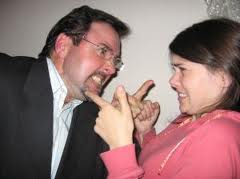
Fighting or distance in a relationship often occur because of a problem with separateness or boundaries. Just as every country and every state has a boundary and will fight to protect their own territory, so we each have personal boundaries. We need boundaries to protect us from intrusion and abuse. Boundaries prevent us from being controlled by others. We need this separateness.
     
Healthy boundaries protect us and should be maintained all the time. We need to keep our individual boundaries intact in our relationships. The State of Ohio would never give up its boundary to Kentucky yet both states enjoy inter-state commerce. So, even in very close relationships we need to keep our boundaries unbroken.
     
Many of us grew up in homes where boundaries were damaged. Some of us grew up with no boundaries. Some of us have boundaries only part of the time or in certain situations. And some of us learned to put up walls instead of a boundary. If we have no boundaries we have no protection. We have trouble saying no. We expect others to be able to read our minds. We intrude on others space—giving advice without being asked, making decisions for others, or demanding they think as we do. We cling to others physically or emotionally.
     
Walls are a way to keep people out. They give us complete protection but prevent intimate connection with others. When couples have screaming fights they are putting up walls of anger. A wall of fear or a wall of silence is erected by people who are very withdrawn or isolated. They may run away if approached or give off a very cold message of “Leave me alone.”
     
If we have no boundary we will be hurt by criticism; we will feel defensive or guilty even when we have done no wrong. With a boundary we have time to think. We can stop the anger or the criticism from coming inside and hurting us. Imagining healthy boundaries will help you to develop them. You can imagine a black border around your body, like those around cartoon characters. Or you might think of a “force field” around you. Stop every request at this border and think about what you want. Do the same with criticism, deciding whether the person offering the criticism has a valid point or not.
     
Learn to keep your boundary intact even when your partner puts up a wall of anger or a wall of distance. Understand that he or she is doing this for protection. Then you won’t need to retaliate or intrude on his or her boundary. This alone may help your partner feel safe enough to let you get closer.

“Show respect to everyone.” 1 Peter 2:17 NLT

Blessings, Dottie

Tuesday, July 3, 2012

Is A Battle of the Sexes Inevitable?


Couples often engage in a classic battle of the sexes. This is a fight over the ways in which men and women are basically different. Gender differences are usually part of the core conflicts all couples experience. Our society in recent decades has escalated the battle of the sexes. Some confusion and mistrust was inevitable and necessary in order to achieve greater equality for women. However, the anger and mistrust between the sexes now often reaches the point of open warfare in which no one wins.

Women lament “Why can’t a man be more like a woman?” Men echo the cry with “Why can’t a woman be more like a man?” Gender differences are here to stay. They are real and they will not change. Roles or stereotypes may change but true gender differences will not. Some of these differences are physical, including the differences in reproductive organs. Men are also about ten percent taller than women; they have more muscle and therefore more physical strength. Women have joints that are more flexible; more body fat and a longer life span.
     
There are also developmental differences. Girls sit, crawl, walk and talk earlier than boys. Girl infants are more sensitive to touch, smell and sound. Boys in contrast are ahead of girls in visual/spatial ability.

In men brain development is localized in the left hemisphere where logic and reasoning take place. Women are born with more connection between their right and left brains.  As a result they are more adept at the right brain functions of communication, intuition and expression of feelings.
     
Studies show that from a very young age boys are attracted to objects and girls are attracted to people. Boys play competitively and girls cooperatively. From early childhood on the male views all interactions as ones in which he is either one-up or one-down. Boys learn to protect themselves from others and to fight to keep their independence. Girls, in contrast view the world in terms of connections. They seek closeness and support in their interactions.
     
Communication for most men is to give information or to solve a problem. Contrast this with women’s view of communication as a means of connecting and a way to share feelings. Conflicts occur in marriages often because of these different views of the world and different ways of communicating.
     
To resolve conflicts in a marriage both partners must reach a startling realization: Your partner is not you. We have tunnel vision. We find it hard to accept the fact that our partner sees things differently and that his or her viewpoint is legitimate. To understand and reach each other we must validate each other’s view of the world. We must see our partner’s logic as equal to ours. This is difficult as it involves giving up our self-centered point of view and making room for other perspectives.

“Each one of you also must love his wife as he loves himself, and the wife must respect  her husband.” Proverbs 5:33 NIV

Blessings, Dottie

Friday, June 15, 2012

Do Childhood Hurts Affect Our Love?


Most of us carry in our hearts some hurts from our childhood. As children we find ways to protect ourselves overwhelming hurt. We hide our hurt; we pretend that we are happy or confident or brave when we really feel fearful, depressed or inadequate. Some of us even learn to detach from our emotions so we feel nothing. 
     
Our heart is the hiding place for all our painful feelings. By the time we reach adulthood many of us have hearts full of pain. When our hearts are full of pain we can’t take in the love that is offered to us. Our hearts are hardened. Hurts that are buried from childhood and adolescence are very difficult and painful to face. In order to do so, we may need to be in therapy with someone we trust. Then we must make the decision to reveal the secret of our pain and share it. Doing this can feel very unsettling, risky and even painful. Yet it is the only way to free our heart of its pain so there is room for love.
     
Some will experience very painful emotions during this. Many of these feelings were frozen in our hearts from childhood. We must re-experience some of these emotions in order to be able to open our hearts to love. Another way to think of it is to think of a protective shell around our heart. This shell protects us from pain but it also prevents love from reaching us. Often the shell is a defensive layer of false pride. For example we may act as though we know all the answers when we actually feel very unsure of ourselves. 

There are four ways in which this shell of pride blocks us from receiving and giving love. 
      1.  Judging others. When we judge others we are, on some level, feeling superior to them. We think when someone is different they are “wrong.” We bolster our own self-esteem by thinking less of someone else.

      2.  Fear. We fear rejection so we don’t reach out to others. We fear criticism so we don’t let others know us. Fear prevents us from taking the risks that are a part of loving relationships.

      3. Selfishness. Most of us must fight our own self-centeredness. We are tuned into what we want, what we feel, what we need and we have little awareness or even regard for the needs, feelings and wants of others. Loving and being loved requires effort on our part. We must let love in and receive it and we must respond with love to complete the connection.

      4. Viewing ourselves as unlovable. If we can’t love ourselves it is very difficult to let the love offered us into our hearts and it is very difficult to believe we have anything to give another person. We must learn to love the child we were and the person we are becoming. We must learn to be humble and open like a child – letting go of pride.

“Let the children come to me. Don’t stop them! For the Kingdom of God belongs to such as these.” Luke 18:16 NLT

Blessings, Dottie


Monday, June 11, 2012

TURN THE OTHER CHEEK & GIVE TO ALL WHO ASK


Matt. 5:38-42 If someone strikes you on the right cheek, turn him the other also. And if someone wants to sue you and take your tunic, let him have your cloak as well. If someone forces you to go one mile, go with him two miles. Give to the one who asks, and do not turn away from the one who wants to borrow from you.

Luke 6:29-31 If someone strikes you on one cheek, turn to him the other also. If someone takes your cloak, do not stop him from taking your tunic. Give to everyone who asks you and if anyone takes what belongs to you, do not demand it back. Do to others as you would have them do to you.

Matt. 7:12  Do to others what you would like them to do to you.

TURN THE OTHER CHEEK and GIVE TO ALL WHO ASK.
Father, It seems to me that this scripture describes a peace maker and a very generous person. This is someone who cares about others, listens to others view points, gives to others in need and is openly vulnerable, not defensive, in relationships, that is, turns the other cheek. The loving way is to cooperate and do more than is asked. This is a very high standard and contrary to the ways of our culture.

I am generally a peace maker and I thank you for giving me this disposition. Even so, the inclination to retaliate is strong in most of us, including me. When someone hurts me, I want to hurt them back, though most of the time I stuff it or journal about it or try to talk with the person.

I have learned in my journey with You to be more open and transparent with others, rather than hiding my weaknesses and flaws. Help me continue to grow along these lines of love. I also have overcome much defensiveness though this occasionally raises its head in close relationships. I am giving and caring in many ways, but I need to be more responsive to the needs of others and less self focused. 

Your words command extreme humility and generosity. Help me obey. 


Thursday, June 7, 2012

What is A Power Struggle?


A power struggle is, just as it says, a struggle for power or control.  In most marriages a power struggle begins after the honeymoon phase, as the differences between partners become more evident. Partners then attempt to influence each other and gain control. Often the subject you argue about doesn’t matter. It takes two to maintain a power struggle and this interaction becomes extreme when two very competitive people are married to each other.
     
If the primary goal of both partners is to win the argument then the battle may escalate to name calling, increased anger and even violence. Certainly, in the heat of competition, respect for each other lessens or vanishes. What occurs is a see-saw back and forth of attack and counter attack. “You did such and such….”  “I did that because you did....” Neither partner hears the other as they continue to argue — “I’m right.” “No, I’m right.” 
     
No one wins a power struggle. In fact, in a marriage, either both partners win or both lose. You are on the same side; you are teammates in the battle of life. The outcome of conflicts affects you both. If you win a battle with your partner what have you actually won? If he or she feels defeated, put down or controlled, where is your victory?
     
Couples in a power struggle have never learned how to negotiate differences or how to compromise. Compromise does not mean giving in. The literal meaning of the word compromise is “to promise together.” To change your marriage you must first listen carefully to your partner. One listening technique that will improve communication is the use of mirroring. This is simply, mirroring back what you hear your husband or wife say. Give your partner a brief summary of his or her position.
     
For example, if your partner says, “The sky is green,” you would mirror back, “You’re saying the sky is green.” Mirroring this back to your partner does not mean you agree with it. But it shows your partner that you have heard and it will encourage your partner to tell you more about his or her thoughts. 
     
Use this kind of response especially when your partner’s words feel like an attack on you. This will be hard to do as it involves letting go of the initial defensive response you feel and using your reason to find out more about what the other person means.
     
There is much to learn in order to stop power struggles. You both need to learn to respect and understand your differences. You both need to learn to listen to the feelings behind the words said and respond to these with caring. You both need to learn to say you’re sorry and to not see this as giving in. You both need to learn not to fight over minor issues and you both need to learn that most issues are minor.

“It is better to be patient than powerful; it is better to have self-control than to conquer a city.” Proverbs 16:32 NLT

Blessings, Dottie


Monday, June 4, 2012

The Red Words in Scripture - Keeping Promises


DO NOT BREAK AN OATH OR A PROMISE. 
Matt. 5:33-37 "You have heard it said, ‘Do not break an oath or a promise. Keep oaths you have made to the Lord.’ But I tell you, Do not swear at all: either by heaven, for it is God’s throne; or by the earth, for it is his footstool; or by Jerusalem, for it is the city of the Great King. And do not swear by your head, for you cannot make even one hair white or black. Simply let your ‘Yes’ be ‘Yes,’ and your ‘No’ ‘No’; anything beyond this comes from the evil one."

DO NOT BREAK AN OATH OR A PROMISE.
Father, When I didn’t understand this commandment you led me to do some research. Dallas Willard in The Divine Conspiracy shed some light.  He says Jesus knew the swearing of oaths was done “to impress others with their sincerity and reliability” in order to convince or manipulate others, a kind of “song and dance.”  “Anything more than this ‘comes from evil’ - the evil intent to get one’s way by manipulation of the thoughts and choices of others.”

Father, Our culture is certainly full of this kind of falseness. Help me be true to what I say, to always do what I promise to do. Show me any time I’m guilty of coercing or manipulating others and help me just say things simply and clearly and let others make their own decisions. I’m some times guilty of attempting to manipulate  those I love the most, family members. I'm some times guilty of trying to impress those I don't know well. Help me learn to be transparent in all I say and do. Teach me, change me.


Friday, June 1, 2012

Why is Marriage Difficult?


Marriage is a learning process. In a successful marriage we gradually learn who the other person is and they learn who we are. As with all learning, this is a painful process at times; at times it is a delight. William James said that there are six personalities involved in every relationship: What he thinks he is, what she thinks he is and what he really is; and vice versa, what she thinks she is, what he thinks she is and what she really is. Couples need to sort out all of these personalities, real and imagined. This takes time and patience.
     
Marriage can be the most difficult and frustrating relationship we’ve ever experienced as well as the most intimate, loving and secure relationship possible. Marriages typically go through several stages of development. In the initial stage, often called the honeymoon phase, we expect our mate to meet our every need and we expect him or her to be like we are. This is a self-centered stage; we are mainly concerned about our own wishes and we have little understanding of our mate and his needs or wishes.
     
Since both partners are largely concerned about themselves, a power struggle emerges. This is settled, after some struggle and negotiation, by bargaining agreements —“You do this for me and I’ll do that for you.” The power struggle/negotiation stage is often where couples are stuck.
     
In the third stage of marital development couples learn to appreciate each other’s individuality and they learn to give. They value their differences and encourage each other’s growth. They have changed. They have not changed who they are or their temperament, but they have changed their habits, their attitudes, their reactions and their responses to each other. They may even show their love by giving what the other wants or needs without thought of being repaid and even with some inconvenience to themselves.
     
Couples often remain stuck in the second stage. The key to a successful marriage is to be willing to learn from every problem or conflict without trying to make your partner also learn. If you change, your partner will come along. Marriages become stuck when both partners avoid change. We need to let go of old habits and learn to see things from a different perspective.
     
If you are stuck in stage two it may help to approach each other in a different way than you usually do. Begin with positive things you feel about each other. Ask for your partner’s opinion before you give your own. Listen carefully to what he or she says and try to put yourself in your partner’s shoes. Listen to your partner’s thoughts without jumping to defend yourself.

“Change your ways. Encourage each other. Live in harmony and peace.  2 Corinthians 13:11 NLT

Blessings, Dottie