Thursday, October 13, 2016

I AM IN THE FATHER AND YOU ARE IN ME AND I AM IN YOU

John 14:19-20 Because I live, you also will live. On that day you will realize that I am in my Father and you are in me and I am in you.   

John 14:21-23 Whoever has my commands and obeys them, he is the one who loves me. He who loves me will be loved by my Father and I too will love him and show myself to him           

John 15:4-5  Remain in me and I will remain in you.....If a man remains in me and I in him, he will bear much fruit; apart from me you can do nothing.

John 15:7 If you remain in me and my words remain in you, ask whatever you wish and it will be given you.

John 15:9 As the Father has loved me, so have I loved you. Now remain in my love.

John 15:10-11 If you obey my commands you will remain in my love, just as I have obeyed my Father’s commands and remain in his love. I have told you this so that my joy may be in you and that your joy may be complete.

John 17:20-23 My prayer is not for them [the disciples] alone. I pray also for those who will believe in me through their message [the church through the ages], that all of them may be one, Father, just as you are in me and I am in you. May they also be in us so that the world may believe that you have sent me. I have given them the glory that you gave me, that they may be one as we are one: I in them and you in me. May they be brought to complete unity to let the world know that you sent me and have loved them even as you have loved me.        

John 17:26 I have made you known to them and will continue to make you known in order that the love you have for me may be in them and that I myself may be in them.

These scriptures are overwhelming to read – yet we are often too busy to take these words of Jesus to heart. We abide in him for five minutes and then go our merry way. Today, I suggest we read the above words over and over. Ask God to help us obey his commands. Ask God to teach us to remain in him, to abide in him. Ask God to help us be in complete unity (as the Church) with each other and with Him. Ask God to show us that we can do nothing without him. Books and lengthy discourses have been written about the ideas here. Simply put, the Holy Spirit lives in our hearts and guides us but Is hampered if we don’t fix our eyes on Jesus, follow him in all we do; abide in him.

Woodrow Kroll questions why we give others so much access to our lives with our cell phones and instant access. He says, “Some of us even allow our phone conversations to be interrupted by other phone calls. We often fail to notice that our anxiety for connection with others competes with a connection we can’t afford to take for granted.” We are to abide in him as branches of his vine. We can’t live as independent branches. This is a call for us to be dependent followers, submissive to his will, clinging to Him.

Father,
Forgive us for not abiding in you minute by minute and day by day. Forgive us for every dropped connection and help us clearly hear your voice and do your will. You are the King of Kings and the Lord of Lords and also the Lover of our souls. Without you we can do nothing. Today we will abide in you, we will remain in you,  we will live connected to your vine. We will keep our eyes and heart focused on you minute by minute.
In the mighty name of Jesus we pray, Amen.


Thursday, October 6, 2016

A COUNSELOR’S VIEW OF DIVORCE


This is a talk I gave in 1991, edited some. I’m retired now but will keep this in the present tense as it was written.

A Counselor’s View of Divorce
Couples on the brink of divorce are angry, hurt, unable to communicate and in a power struggle. Some times the power struggle is a cold war, some times there has been actual violence. Sometimes one partner has had an affair. Often by the time I see them one has decided to get a divorce but is coming to counseling to satisfy their partner. Often they have walls up from years of holding onto resentment, from years of abuse or from years of miscommunication. 

I have seen the most disastrous appearing marriages turned around. I've seen couples regain hope and love and work out lasting solutions to their problems within a matter of months. Naturally I've also seen many who have not done this. When both are committed to making the marriage work, I believe, with adequate counseling they can do so.

When I see couples I attempt to:
1. Give them hope that things can work out. I do this by getting them to focus on the times in their courtship or early marriage when they were in love, to remember those good times and the love they began with. I also focus on what they like about each other now and what each wants the other to do now or in the future that would show they care. If couples are actively hating each other I may comment on the fact that hate is a connection and that the opposite of love is indifference. Also, if they feel no love for the other - I may wonder if they can or do love the other person's soul.

2. I focus on the fact that they're both responsible for the problems but no one need be "blamed". They didn't intend for things to end up this way.

3. I educate them about the fact that virtually all marriages reach the power struggle stage and that marriage takes work and commitment. They work very hard on careers and on raising children but often coast regarding marriage.They need to put as much effort into the marriage as they do into careers or child rearing.

4. I work on helping them let go of resentments, forgive each other, improve communication and change their current relationship.

5. The root cause of dysfunctional marriages is often dysfunctional childhood development. Many couples need to work through issues from their families of origin. I do this in the context of marital therapy as I believe this helps them better understand each other and learn to nurture and accept each other - to accept even the childish parts.

Other guidelines:
1. Moving out of the home during the crisis is more apt to result in divorce than to reconciliation. Moving out may also lead to the continuation of an affair.

2. When one person has been involved in an affair the injured partner may become obsessed with the affair. The focus needs to shift off the affair to the meaning behind it and to solutions. The injured partner may want to know all the details. This will only feed the imagination and be difficult to forget. The injured party does have a right to know who, when, where, and in general what happened, how long it lasted and whether it has ended. They also have a right to know about a pregnancy or any sexually transmitted diseases.

3. I recommend couples tell as few people as possible about their problems. Family members mean well but they unwittingly take sides and this complicates forgiveness and reconciliation and encourages continued conflict.

4. It takes a year or more to fully recover from an affair if both partners actively work on it together in counseling.

My comments today: Divorce is devastating to the couple and to extended family members as well as to children, even adult children. The aftermath of divorce is as painful as most marital problems. They will go through a year or two of grieving the loss of the marriage. Divorce is not an easy way out.

If you decide to work on your marriage choose a Christian counselor experienced in marriage counseling who will share your determination to resolve the problems. Groups such as the Third Option, Marriage Encounter and A Weekend to Remember are very helpful and work well along with counseling. An active faith in God, praying and worshipping together will also help solidify your marriage.

Be kind and compassionate to one another, forgiving each other, just as in God through Christ forgave you.” Ephesians 4:32 NLT

Blessings, Dottie


Thursday, September 29, 2016

INTEGRITY IS CAUGHT AS WELL AS TAUGHT

Q.  How can I be certain my children will grow up to live lives of integrity? They’re old enough to hear the news and they’re aware that many leaders in business, entertainment and politics make a habit of breaking the Ten Commandments and the laws of our land. Yet these leaders are very successful and are even held up as heroes. How can I instill integrity in my children?

A. Integrity begins at home. It must be caught as well as taught. Children “catch” it from parents who have high ethical standards; who are consistently honest and reliable. These are parents who don’t tell white lies, who don’t exaggerate, who don’t make empty threats and who don’t break their promises. Your example is of prime importance.

Many of us let our own integrity slide at times. Our culture is so accepting, if not encouraging, of this. The temptation to relax our standards is constant and leads us to make excuses, to rationalize small but compromising choices. We “forget” some cash income when reporting our taxes. We “borrow” a tool from work and never get around to returning it. We copy personal items on the office copier rationalizing they owe this to us since we’re underpaid. Or we tell a “white” lie to explain why we can’t attend a neighbors’ party.
         
Children know how consistent their parents’ integrity is and they’re influenced by this.  We are their first models. To raise children with high moral and ethical standards we must model these standards. This doesn’t mean we have to be perfect. Children will understand if we level with them. When we catch ourselves violating a standard we hold, we can share our struggle with our children and tell them of our determination to not let this happen again. We can also explain the peace of mind we have when we live up to what we know is right.
.        
In addition to modeling the standards we believe in we must also articulate high standards to our children. Spell out to your children just what your values are. List them, talk about them, and explain them. Young children will need to learn the difference between a lie and the truth, for example. 
         
Use experiences in your daily lives to teach integrity. TV programs can be watched with your children and then discussed, pointing out the questionable values shown or the support for your own ethics. Encourage them to question and think about the family standards.
         
Use a child’s violation of rules or ethics to teach them why this standard is so important.  Don’t lecture or vent your anger, but rather teach them. Help them think about the consequences of their actions. Ask them what would happen if there were no standards? What would happen if everyone made their own rules and did as they pleased? Listen to and discuss their answers.
         
Our values stem from our view of life and from our faith in God, and they form our understanding of what life’s all about. Have you taught your children about your faith? Teaching children to know God and love him is of utmost importance to their developing integrity. In fact, knowing God is life changing! To further assure that your children learn to live lives of integrity, find a church that teaches biblical truth, and has a loving, caring Sunday school and youth program for all ages. You don’t have to do all the teaching. 
         
In all that you teach your children, teach them “to love God with all their heart, soul, mind and strength and to love their neighbor as themselves.”  (Matthew 22:37-39)

“These commands are a lamp, this teaching is a light, and the corrections of discipline are a way of life.” Proverbs 6:23

Blessings, Dottie


Thursday, September 22, 2016

Books on Money and Materialism

Money is a difficult subject in today’s world, but a very important one especially for Christians who want to honor God. We live in a materialistic world with quick credit. It’s easy to get into debt and often hard to resist the many “things” we are tempted to buy. Also expenses are high for housing, for college, and for all the “necessary” things to live a good life. The two books reviewed below will help you sort out your own priorities. They will challenge you to think about how you spend your money and how you value your things. They will even help you change your ways!

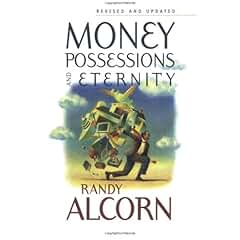
Money, Possessions and Eternity

By Randy Alcorn

This is an outstanding, well written, comprehensive book clearly explaining biblical truths about money and possessions and clearly exploring the materialism of our culture. Why does the title include “eternity?” Randy Alcorn says “our use of money and possessions is a decisive statement of our eternal values. What we do with our money loudly affirms which kingdom we belong to.” pg. xv  He focuses on the eternal implications throughout the book and says in the introduction that “There is something in this book to offend everyone.” pg. xvi

Money, Possessions and Eternity is 421 pages long and in addition contains practical appendices and a study guide. Alcorn addresses how to manage our money, the importance of giving and giving more than ever, how to set priorities, and how to avoid hoarding. This is a book I will read over and over again.

Seven: An Experimental Mutiny Against Excess

By Jen Hatmaker

Jen Hatmaker designed an experiment to address greed, materialism and indulgence in our culture. The author’s emphasis is on protecting the environment and helping others in need. She and her family and friends limited themselves in 7 areas – one each month. For example, they agreed to wear only seven articles of clothing (not counting underwear) for one month. The other areas were food, possessions, media, waste, spending, and stress. Yes, she and her husband ate only seven foods in month number one. 

Hatmaker details their plans and their successes and failures at limiting their way of life. She also details the learning they derived from each month long experiment. The book held my interest, it’s well written, with humor. The chapter on stress is excellent and offered a way to practice being still – with prayer seven times a day. This book seemed somewhat contrived – yet is worth reading.

Don’t worry about things, Saying, ‘What will we eat? What will we drink? What will we wear?’ These things dominate the thoughts of unbelievers, but your heavenly father already knows all your needs. Seek the Kingdom of God above all else, and live righteously, and he will give you everything you need.”  Matthew 6:31-33 NLT

Blessings, Dottie


Thursday, September 15, 2016

THE BENEFITS OF ADVERSITY

Q. A group of my friends recently talked about difficult or even traumatic life experiences. Some in the group thought there were positive benefits to their adverse experiences even though these experiences had been very painful and the pain lingered for years afterwards. Others in the group with similar experiences disagreed. They saw no benefits to their painful experiences. What are your thoughts on this?

A. There can be positive benefits to adversity for many people even those who have been through the worst imaginable experiences such as sexual assault, natural disasters or severe health problems. Different events show varying rates of benefit.  For example, one study showed 95 percent of tornado survivors, 70 percent of mass shooting survivors and 35 percent of plane crash survivors reported benefit when asked three years later. 

The perception of benefit was not a Pollyanna type denial of the harm done them. Rather, these survivors reported they had been harmed as well as benefited. The studies, though done independent of each other, showed a similarity in the kind of benefits reported. These included a change in life priorities, increased sense of self-worth, more sensitivity to others, improved relationships and greater faith in God.

An article by J. Curtis McMillen, PhD, titled How People Benefit from Adversity reviewed the literature and the research on this topic.  His main conclusions follow.

1. “What doesn’t kill you makes you stronger.” Studies suggest that traumatic events can increase self worth if the person discovers as a result of the trauma that they are able to manage difficult new situations or tasks adequately. As a result they view themselves as more capable and they have less concern about future adverse events. Future adversity may even be viewed as a challenge.  

2. Adversity is a wake-up call. An adverse event may begin a process of self examination. Survivors may make conscious changes to achieve greater happiness and improved physical and emotional health. They may eliminate responsibilities, search for a less stressful, more satisfying job, arrange to spend more time with family or vow to enjoy life more.

3. Survivors learn “people aren’t so bad after all.” Two factors lead to changes in the way survivors view others following adversity. One has to do with having received support from others during their trauma. The other is a result of experiencing a greater sense of their own vulnerability. This new experience of vulnerability often leads to greater empathy for others in need. 

4. Survivors find new meaning to life. Survivors’ views on faith in God, life and death may change after adversity. Some survivors find meaning in very painful events by assisting others who have gone through similar trauma or by preventing such trauma from happening to others. 

Ernest Hemingway said, “The world breaks everyone and afterward many are strong in the broken places.”

Robert Schuller in his book Life’s Not Fair but God Is Good puts it this way: “When is trouble not trouble?....When trouble teaches you valuable lessons that you would have been too blind to see, too arrogant to believe, or too stubborn to accept any other way than by this bed of pain; when it slams the door in your face to force you out of a rut that you would never have had the courage to leave...” He also says “Trouble is often God’s way of making us lie down, turn around, sit still, pray, work harder, or start over again!”  Adversity can have benefits!

“Consider it all joy when you encounter various trials, knowing that the testing of your faith produces endurance. Let endurance have its perfect result, so that you may be perfect and complete, lacking in nothing.” James 1:2-4 NASB

Blessings, Dottie


Thursday, September 8, 2016

I AM THE GOOD SHEPHERD

John 10:11 I am the good shepherd. The good shepherd lays down his life for the sheep.

John 10:14-15 I am the good shepherd. I know my sheep and my sheep know me - just as the Father knows me and I know the Father - and I lay down my life for the sheep.

John 10:16 I have other sheep that are not of this sheep pen. I must bring them also.  They too will listen to my voice, and there shall be one flock and one shepherd.

Jesus says, “I am the good shepherd.” We like the comforting image of Jesus as the good shepherd. But do we realize this means we are the sheep? We are prone to wander like sheep with little sense; we follow the whims of the moment. We may even follow a wrong leader, a false teacher. Sheep are easily led astray.

Woodward Kroll says, “We can’t recognize Jesus as the Good Shepherd unless we get to the place where we begin to understand that we are sheep.” We won’t recognize our need until we face our lost-ness and our need for him.

We say the 23rd Psalm – The Lord is my Shepherd – but focus on the word Shepherd. Is he really our Lord? This is not optional. Kroll says, “Lots of people want to make the Shepherd part primary and the Lord part optional. But wanting to have a Shepherd who isn’t Lord, only shows that we don’t understand the meaning of Shepherd and Lord.”
The good shepherd lays down his life for the sheep, for us. This is awesome and sobering.

Jesus also says (in John 10:16) that he has other sheep in another pen. These are the gentiles he’s talking about – that’s us! Isn’t that awesome? He says “I must bring them also and they will listen to my voice and there will be one flock and one shepherd.” This surprised me as Jesus is talking to the Jews. He knows about us even then and he knows he will die for us.

Dear Lord,
We thank you that you are our Lord and Savior and that you are the Good Shepherd who died for us. Help us truly grasp this in a new and deeper way. We are like sheep and we need you.

Note to readers: See I Am the Gate post which is connected in Scripture to I Am the Good Shepherd.


Thursday, September 1, 2016

What is Worship?

Worship Defined
What is worship? Is it just what you do in a church service? Or can you worship anywhere?

Here are some thoughts on worship:
“Those who wait on the LORD shall renew their strength. They shall mount up with wings like eagles. They shall run and not be weary. They shall walk and not faint” (Isa. 40:31). What a promise! When we wait on God he strengthens us. Our spirit soars like an eagle. “He gives strength to the weary and increases the power of the weak” (v. 39). Worship is waiting on God. We bow before him, we praise him, we glorify him and he strengthens us.
         
Worship lies at the heart of the Christian faith. Moses and the Israelites worshipped God, and his presence, his glory, filled the tabernacle and covered their travel—as a cloud by day and as fire by night. (Exodus 13:21) Moses spent days in the presence of God and his face glowed. (Exodus 34:29) Jesus worshipped regularly in the synagogue, taught his disciples to pray and told the woman at the well to worship “in spirit and in truth” (John 4:24). The New Testament church worshipped together with songs and teachings from scripture. Paul told the Colossians, “Let the word of Christ dwell in you richly as you teach and admonish one another with all wisdom, and as you sing psalms, hymns and spiritual songs with gratitude in your hearts to God” (Col. 3:16). Paul stressed orderly worship that would teach and enlighten us.
         
Worship connects us with the presence of God. True worship, opening our hearts to God and praising him, is fearful and astonishing. It changes us. Worship is as vital to our faith as breathing is to our bodies. We bow in adoration, devotion, respect and awe. God is holy and eternal. We are finite. We humble ourselves in this holy encounter. We meet God weekly in corporate worship, as a church body. The fragrant aroma of his presence in us and in the church increases in proportion to our prayer and worship. ( Changing Churches pg. 101-102.)

Here’s another excellent definition of worship: 
“In worship the conscience is quickened by the holiness of God, the mind is fed by the truth of God, the heart is opened to the love of God, and the will is devoted to the purpose of God.”  William Temple, clergyman                                                                                                                    
How do you spell Worship? How about this?

Wait on the Lord. “They who wait upon the Lord shall renew their strength.” (Isaiah 40:31)

Open your heart to God. “Trust in the Lord with all your heart and lean not on your own understanding. (Proverbs 3:5)

Repent of your sin. Humble yourself before him. Rid yourselves of all malice and all deceit, hypocrisy, envy, and slander of every kind. (1 Peter 2:1)

Silence all but his word and presence. We must silence the world and our inner dialog. "Be still and know that I am God" (Psalm 46:10).

Humble yourselves before him. He is holy, we are not. “Holy, holy, holy is the Lord of hosts, the whole earth is full of His glory.” (Isaiah 6:3)

Involve your body, mind, will and emotions in adoration.  “Let the word of Christ dwell in you richly as you teach and admonish one another with all wisdom, singing psalms and hymns and spiritual songs, with thankfulness in your hearts to God.” (Colossians 3:16)
              
Praise his name.  “Sing praises to God, sing praises; sing praises to our King, sing praises.” (Psalm 47:6)

Here’s a dictionary definition I just found. “Worship is to honor God with extravagant love and extreme submission.” We worship an amazing God. We must be extravagant in our love and extreme in our submission to our Holy God.

Blessings,

Dottie